


Two Versions of FDR’s Infamy Speech

Compare and Contrast
Share to Google Classroom
Recommended Activity
Published By:
National Archives Foundation
Historical Era:
The Great Depression and World War II (1929-1945)
Thinking Skill:
Historical Analysis & Interpretation
Bloom’s Taxonomy:
Analyzing
Grade Level:
Middle School, High School
Suggested Teaching Instructions
Use this activity when studying Pearl Harbor, the beginning of US involvement in World War II and/or Presidential addresses (or in the language arts classroom when studying word choice). For grades 6-12. Approximate time needed is 45 minutes.
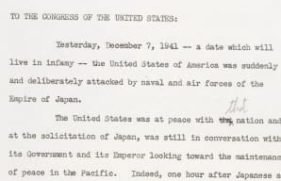
Direct students to read the final Senate copy of President Franklin D. Roosevelt’s Date of Infamy speech as you listen to the recording of President Franklin Roosevelt’s “Day of Infamy” speech. Tell students to note the following as they listen to the speech:
- What was the purpose of the speech? Cite specific textual evidence to support your opinion.
- What evidence does FDR provide to support his argument?
- Describe the structure of FDR’s speech. How is information presented?
- How does FDR use the following techniques to enhance his speech: repetition, alliteration, emotionally charged words, appeal to self-preservation, and assurance of moral superiority. Cite specific uses of these techniques.
- In the recording, which phrases or words does Roosevelt emphasize in reciting the speech? Why do you think these are emphasized?
- Which parts of the speech get a reaction from the audience in Congress? Why do you think Congress applauded these lines?
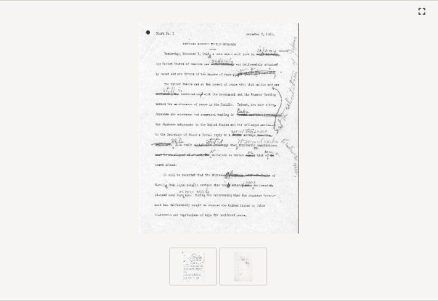
After listening to the speech and discussing their findings, direct students to compare and contrast the earlier type-written draft with the final copy.
Ask students to note the three most important changes that Roosevelt made between the two versions. Explain the impact of the changes and their effect on the meaning and tone of the speech.
This activity is adapted from an article by Elsie Freeman, Wynell Burroughs Schamel and Jean West.

To the extent possible under law, National Archives Foundation has waived all copyright and related or neighboring rights to “Two Versions of FDR’s Infamy Speech”
Description
This activity presents students with two versions of President Franklin D. Roosevelt’s famous speech following the Japanese attack on Pearl Harbor: an earlier typewritten draft and the final Senate copy of the address. Students will read, analyze, and contrast these two versions to see the impact of his changes to the overall message and tone of the speech.
Share this activity with your students
Documents in this Activity
President Franklin D. Roosevelt's Day of Infamy Speech
The Great Depression and World War II (1929-1945)