

Analyzing Anti-Slavery Petitions

Compare and Contrast
Share to Google Classroom
Recommended Activity
Published By:
National Archives Foundation
Historical Era:
Expansion and Reform (1801-1861)
Thinking Skill:
Historical Comprehension
Bloom’s Taxonomy:
Understanding
Grade Level:
Upper Elementary
Suggested Teaching Instructions
This activity can be used during a unit on slavery and the abolition of slavery or during a unit on the fundamental values and principles from the Declaration of Independence. For grades 3-5. Approximate time needed is 45 minutes.
Students can complete the activity as a whole class, in small groups, or in pairs. Begin the activity by asking students to define the terms enslaved person and abolition.
- What does it mean to be an enslaved person?
- What does it mean when we say the abolition of slavery?
After defining these terms as a class, model with students how to analyze the Address from the Women’s Loyal National League Supporting the Abolition of Slavery.
Begin the activity by asking students to identify what details they notice about the document.
- What type of document is this?
After discussing the details they notice, model with students how to become Document Detectives to uncover key ideas about the document. Ask students the following questions and give them time to brainstorm their response to each question as a whole class.
- Who wrote the document?
- When was it written?
- Where is it from?
After sharing their observations, tell students they are now going to take a closer look at the main purpose of this document. Direct students’ attention to key phrases in the opening paragraph of the letter.
- What is the main idea of this paragraph?
- What is the author of the letter asking the women of the republic to do?
Following the whole class discussion about the main idea and purpose of the letter, explain to students that this letter asks women from around the country to circulate a petition for the abolition of slavery. At that time, women in the United States were unable to vote. To make their voices heard on important social issues of their day women organized themselves and used petitions to influence Congress. The Women’s National League was an organization whose sole mission was to campaign for a constitutional amendment to abolish slavery. With Elizabeth Cady Stanton as the league’s president and Susan B. Anthony as the secretary, the women organized one of the largest petition drives the nation and Congress had ever seen.
Following the whole class discussion about the Address from the Women’s Loyal National League Supporting the Abolition of Slavery, divide students into small groups and assign each group one of the following petitions to analyze: Anti-Slavery Petition from the Women of Philadelphia, Anti-Slavery Petition from the Citizens of New York, OR Petition from Pennsylvanians to Reject Slavery. Ask students to become document detectives and to identify key details about the document. Give students 10 minutes in their small groups to examine the document and to answer the following questions:
- Are there any special markings on the document?
- Who wrote the document?
- When was it written?
- Where is it from?
- What is the main idea of the document?
- Why do you think this document was written?
Ask groups to share details they discovered about their document with the whole class. What similarities and differences do they notice between the documents they analyzed?
After analyzing the documents, ask students to reflect on the ideals of the Declaration of Independence and how Americans have fought to define, secure, and protect those ideals throughout history.
- How have Americans fought to define, secure, and protect the ideal that all men are created equal throughout history?
- How can you take action to change rules and laws that seem unfair, and promote change in an effective way?
Explain to students that the constitutional right to petition the government is protected in the First Amendment, and the American people have exercised their right to petition since 1789.
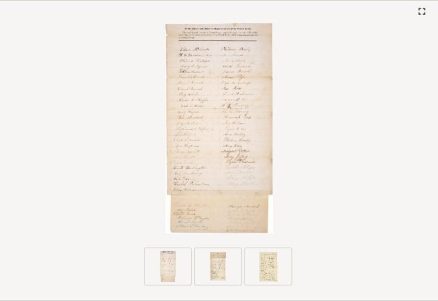
Following the discussion of the key ideals from the Declaration of Independence, display the Joint Resolution proposing the Thirteenth Amendment to the Constitution. Share the following about the document: A joint resolution is something that both parts of Congress (who make laws) agree to. A constitutional amendment must be passed as a joint resolution first, and then it is sent to all the states for ratification. If at least three-fourths of states ratify it, it becomes an amendment – a change to the Constitution. This is a draft of a joint resolution proposing the 13th Amendment to the United States Constitution that started in the Senate. This particular resolution became the 13th Amendment, ending slavery in the United States in 1865. Anti-slavery petitions influenced the passage of the 13th Amendment by bringing public pressure to Congress and by helping build support for the amendment.
For additional materials related to Analyzing Anti-Slavery Petitions (including Guiding Questions, National Standards, Historical Background and Supplemental Educational Resources).

To the extent possible under law, National Archives Foundation has waived all copyright and related or neighboring rights to “Analyzing Anti-Slavery Petitions”
Description
In this activity, upper elementary school students will examine petitions to abolish slavery in the first half of the 19th century. After reviewing key details from the petitions, students will see the Joint Resolution proposing the Thirteenth Amendment to the Constitution.
Share this activity with your students
Documents in this Activity

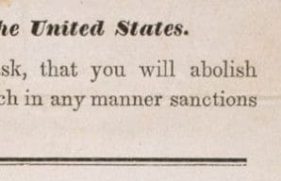
Petition from Citizens of New York Asking that Slavery and the Slave-trade may be Expressly Prohibited by Act of Congress in all the Territories of the United States
Civil War and Reconstruction (1850-1877)
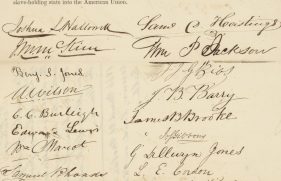
Petition from Pennsylvanians to Reject Slavery
Expansion and Reform (1801-1861)