


The Settlement of the American West

Making Connections
Share to Google Classroom

Recommended Activity
Published By:
National Archives Foundation
Historical Era:
The Development of the Industrial United States (1870-1900)
Thinking Skill:
Chronological Thinking
Bloom’s Taxonomy:
Understanding
Grade Level:
Middle School, High School
Suggested Teaching Instructions
Learning Objectives: Students will identify connections between documents and photographs to discover how the United States populated the West in the late 1860s and early 1870s. Students will be encouraged to suggest additional documents and to consider whether such new evidence would change the historical narrative or their own conclusions. For grades 6-8. Approximate time needed is 20-30 minutes.
Instructions: Quickly show all the documents included in the activity to the class. Explain that, as a class, they will come up with links between the documents. Also, instruct the students to “View Primary Source Details” for each document to find further information.
Model careful document analysis with the each document in the sequence. Direct your students to examine the first three documents. Ask them what connections they see and if there any cause-effect relationships between them? Answers to these questions should be entered into the first blank text box.
Ask your students to closely examine documents four and five. Ask them what land was the family passing through and who else was already there? Answers to this question should be entered into the second blank text box.
Direct the students to examine documents six through eight. Ask them to think about the effects of the Pacific Railroad Act and the completion of the Transcontinental railroad might have had on the ability of easterners to migrate west. Ask them to consider the effect this might this have had on Native Americans already living there? Answers to these questions should be entered into the third blank text box.
If not already presented, provide the students with details regarding the Ft. Laramie Treaty and the effect of the discovery of gold on migration to land promised to the Sioux under the treaty.
Then, as a group, examine the Ft. Laramie Treaty (document nine) and the First Report of the Battle of Little Bighorn (document 10). Based on the information provided and their analysis of these two documents, can they identify any cause/effect relationships between them? Answers to this question should be entered into the fourth blank text box.
This is one possible set of connections between these documents:
- Photograph of Abraham Lincoln
- Homestead Act
- First Homestead Act CertificateConnection: Lincoln was president when the Homestead Act was passed in 1862, which provided incentives for immigrants and those already living in the eastern half of the U.S. to move west. Daniel Freeman received the first certificate for land under the Homestead Act.
- Family in pursuit of a homestead
- Map of Nebraska and Kansas Territories, showing the location of Indian ReservesConnection: Like Freeman, this family also sought land to build a home in the West. However, this land was already populated by a number of Native-American groups.
- Pacific Railroad Act
- Directors of the Union Pacific Railroad
- Joining the Tracks of the Transcontinental Railroad at Promontory PointConnection: The railroad railroad aided in the development and settling of the West by easterners.
- Fort Laramie Treaty.
- First Report of the Battle of Little Bighorn.Connection: Encroachment by Whites seeking gold in the Black Hills (land promised to the Sioux by the Fort Laramie Treaty) led to armed conflict.

To the extent possible under law, National Archives Foundation has waived all copyright and related or neighboring rights to “The Settlement of the American West”
Description
Students will analyze primary sources with an eye for cause-and-effect relationships. They will identify the roles of government policy and technological improvements in the settlement of the West, and explain their impact on Native Americans.
Share this activity with your students
Documents in this Activity

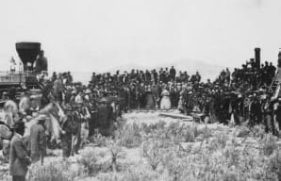
Joining the Tracks for the First Transcontinental Railroad
The Development of the Industrial United States (1870-1900)
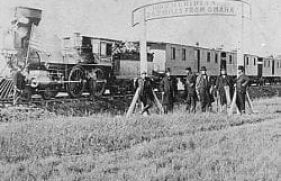
Directors of the Union Pacific Railroad
The Development of the Industrial United States (1870-1900)