


The Second Red Scare and McCarthyism

Making Connections
Share to Google Classroom
Published By:
Jayla Morris
Historical Era:
Postwar United States (1945 to early 1970s)
Thinking Skill:
Historical Analysis & Interpretation
Bloom’s Taxonomy:
Applying
Grade Level:
High School
Suggested Teaching Instructions
To start the lesson, ask students to reflect on a time where themselves or someone they knew were accused of something they did not do. Ask the students how that made them/the person feel and if it caused a sense of skepticism towards the accuser.
Tell the students that they will be reading 4 different documents from the 1950s Cold War Era about the accusations of communists in the United States. These documents are all authored by government officials from senators to the President of the United States of America. Inform students that they will answer given questions, then should discuss their answers with a classmate.
As they read the documents, they should write down any of the following below:
- Mentions of communism with little to no evidence
- Anything that stands out
Once students are done reading, they will answer the questions below.
- Based on the documents, do you believe that McCarthy was able to convince others that Communism was in the United States? How and why/why not?
- Do you believe that Frank Capra’s letter was a result from McCarthy’s accusations? Why or why not?
- How do you think those in opposition of McCarthy’s claims further sparked tension in the United States?
- Do you believe that McCarthy’s accusations are similar to events that have happened/events happening in the United States right now?
- How do you think the public perceived the tension happening in the United States’ government?
After the allotted time for students to answer questions, the teacher should assign randomized groups of 3-5. Each group will have a discussion about their answers. Below are guiding questions for groups to start a discussion.
- What similar/different ideas does your group share?
- What do you think McCarthy’s motivation was to all the accusations?
- How do you think you would react to being accused as a Communist?
After the discussion, the students will have the two options as an assessment:
Option A: Students can create their own communist propaganda posters that are against Communism. After they complete the poster, the student will write one to two paragraphs on how McCarthyism during the Second Red Scare affected the First Amendment rights, the American public, and American policy.
Option B: Students can pretend to be either an accused government official or a nervous average American to write a one page diary entry on how the tension in the United States is effecting their lives.

To the extent possible under law, Jayla Morris has waived all copyright and related or neighboring rights to “The Second Red Scare and McCarthyism”
Description
This activity can be used for a lesson on the skepticism phenomena of the Cold War Era in the United States and the effects it had on American society. Students will read and interpret 4 documents from the Second Red Scare (1950-1954) to make connections between McCarthyism and the tensions during the Cold War Era.
Share this activity with your students
Documents in this Activity

Resolution to Censure Senator Joseph McCarthy
Postwar United States (1945 to early 1970s)
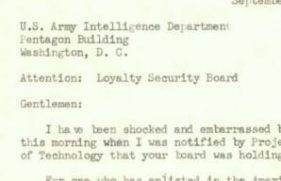
Letter from Frank Capra to the U.S. Army Intelligence Department, Loyalty Security Board
Postwar United States (1945 to early 1970s)