

The Long Struggle for LGBTQ+ Civil Rights

Finding a Sequence
Share to Google Classroom

Recommended Activity
Published By:
National Archives Foundation
Historical Era:
Across Historical Eras
Thinking Skill:
Chronological Thinking
Bloom’s Taxonomy:
Analyzing
Grade Level:
High School
Suggested Teaching Instructions
This activity would work well for units that include the civil rights movements of the 1960s, or for specific units on LGBTQ+ (LGBT, LGBTQIA) history. For grades 8-12. Approximate time needed is 40 minutes.
Note: Students will see commonly used words from the 1950s, 1960s, and 1970s in these primary sources: “homosexual” and “Negro” – rather than today’s more acceptable terms “gay” and “Black.” This is explained in the activity’s instructions, but historical terminology and changes in language over time may be something you want to discuss with students either before or after the activity.
To begin, display the activity for students and select one primary source with which to model document analysis. Then ask students to begin the activity working individually or in pairs. They should read through each source, then place them all in chronological order. Remind students to carefully examine each primary source by clicking on the orange “open in new window” icon to see it more closely (this is also necessary to watch the video) and to read the historical context provided for each one.
Instruct students to analyze each historical source in full (and not just look for the date) because they should be thinking about (or writing down) the issues presented, how people tried to change things, and the successes of the movement in preparation for the follow-up questions.
The correct order for the sources is:
- Opening statement from the Hoey Committee hearings, which investigated the employment of gay people in the Federal workforce during the Lavender Scare – July 1950
- Harvey Milk’s application for the commissioned rank of ensign – November 1951
- Harvey Milk’s letter of resignation from the Navy after an investigation into “suspected homosexual conduct” – January 1955
- Kameny v. Brucker, the court case in which Frank Kameny tried to overturn his firing from the Army Map Service because of his sexual orientation – 1960
- Letter from Frank Kameny to President John Kennedy – May 1961
- Documents from Baker v. Nelson, the earliest same-sex marriage case reviewed by the Supreme Court – January 1971
- Harvey Milk’s speech at San Francisco Gay Freedom Day Celebration – June 1978
- Photograph of Frank Kameny with President Barack Obama at the White House – June 2009
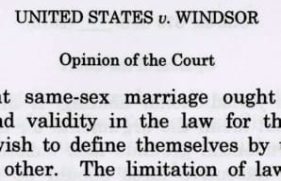
- Opinion of the Supreme Court in U.S. v. Edith Windsor, which declared the Defense of Marriage Act unconstitutional – June 2013
- Jim Obergefell’s phone call from President Barack Obama congratulating him on his success in Obergefell v. Hodges, which legalized same-sex marriage in the United States – June 2015
After the students complete the sequencing of the sources, they should click on “When You’re Done” and answer the questions provided. Conduct a full-class discussion based on these questions:
- Which specific aspects of civil rights do the sources cover?
- What methods did people use to work for change? What arguments did they make to support their point of view?
- What do you think are some of the most important successes of the LGBTQ+ civil rights movement? Why do you think so?
- How do the issues in the historical records connect to civil rights issues today?
You may also wish to discuss with students what kinds of sources are missing from this activity that would be useful for understanding LGBTQ+ civil rights history. (All of these documents come from the holdings of the National Archives. At the National Archives, we hold documents and other records largely created by the Federal Government in the course of doing Federal business. The scope of our holdings is limited by this factor.)

To the extent possible under law, National Archives Foundation has waived all copyright and related or neighboring rights to “The Long Struggle for LGBTQ+ Civil Rights”
Description
In this activity, students will read and analyze 10 primary sources related to LGBTQ+ civil rights, then place them in chronological order. The activity will introduce students to a wide range of sources from LGBTQ+ civil rights history and help them understand the issues at different points in time, as well as when, how, and why changes occurred.
The sources range from the 1950 Hoey Committee opening statement during the Lavender Scare – a time when thousands of gay employees were fired or forced to resign from the Federal workforce because of their sexuality – to a 2015 phone call from President Barack Obama congratulating Jim Obergefell on his victory in the Supreme Court case Obergefell v. Hodges, that legalized same-sex marriage in the United States.
Share this activity with your students
Documents in this Activity
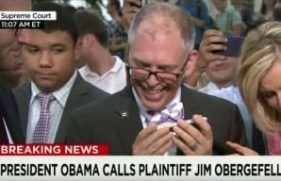
President Obama's Phone Call to Jim Obergefell
Contemporary United States (1968 to the present)