


The Impact of the Immigration Act of 1924

Interpreting Data
Share to Google Classroom
Recommended Activity
Published By:
National Archives Foundation
Historical Era:
The Emergence of Modern America (1890-1930)
Thinking Skill:
Historical Analysis & Interpretation
Bloom’s Taxonomy:
Analyzing
Grade Level:
High School
Suggested Teaching Instructions
This activity can be used while studying immigration and late 19th-early 20th century nativism in the United States, during a unit on World War I, or when focusing on the impact of U.S. immigration restrictions on the refugee crisis during World War II.
For grades 7-12. Approximate time needed is 30 minutes. The activity can be done individually or in pairs. Students should have some knowledge of anti-immigrant sentiment and security concerns during World War I.
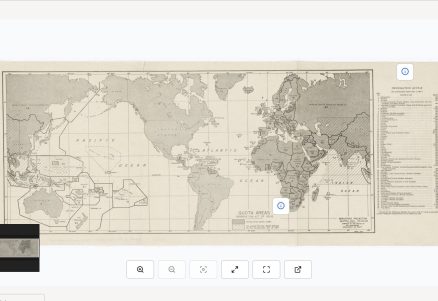
The focus is a map issued in 1940 to illustrate President Franklin D. Roosevelt’s Proclamation 2283 of April 28, 1938 (repealed by President Harry S. Truman on June 30, 1952) reaffirming quotas from the Immigration Act of 1924.
Ask students to read the introduction and instructions and begin the activity. Their attention will be drawn to the information pins that will prime them to answer the questions in the “When You’re Done” section:
- What does this map demonstrate about attitudes toward immigrants in the 1920s, 1930s, and 1940s?
- What was happening in America and in the world during that period that might provide context to these numbers?
- What questions do you have about the quota numbers?
- What impact do you think the immigration restrictions had on the demographics and the cultural, ethnic, and religious makeup of the United States?
Discuss students’ answers as a class. The following background information may be helpful to explain to students once they have completed the activity:The Immigration Act of 1924 limited immigration to 2 percent of that nationality already living in the United States in 1890, as recorded by census takers. During the 1920s, Congress had enacted laws establishing an annual ceiling for all nationalities and a system for calculating the number of each nationality to be granted entry. They used the 1910 census as the basis for determining how many immigrants from each country would be allowed to enter. The limit for each nationality was 3 percent of that nationality already living in the United States, per the census. The even more restrictive Immigration Act of 1924 established the 1890 census as the new base for determining how many immigrants would be admitted and reduced the percentage admitted to 2 percent.
The 1924 law also traced the national origins of the entire population of the United States, including natural-born citizens. This meant that people from Britain and Western Europe living in America for generations received larger quotas than those newly arrived from Southern and Eastern Europe. The law prohibited immigration of people from Asian countries entirely. (The 1924 act set the minimum quota of any nationality at 100, but there was a provision that the number of inhabitants in the United States upon which the quotas were based did not include “aliens ineligible to citizenship or their descendants,” which is how Asian immigrants in the United States were classified.)

To the extent possible under law, National Archives Foundation has waived all copyright and related or neighboring rights to “The Impact of the Immigration Act of 1924”
Description
In this activity, students will analyze a map showing quotas established by the Immigration Act of 1924, also known as the Johnson-Reed Act. They will be prompted to think about which countries were favored and which were barred from entering the United States. Then they will reflect on attitudes toward immigration at the time, and the effect these immigration restrictions had on the demographics and cultural, ethnic, and religious makeup of the United States.