

Senators’ Pay in the First Congress

Interpreting Data
Share to Google Classroom
Recommended Activity
Published By:
National Archives Foundation
Historical Era:
Revolution and the New Nation (1754-1820s)
Thinking Skill:
Historical Analysis & Interpretation
Bloom’s Taxonomy:
Applying
Grade Level:
Middle School
Suggested Teaching Instructions
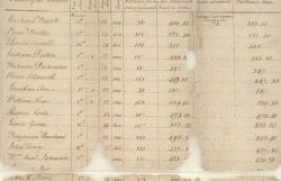
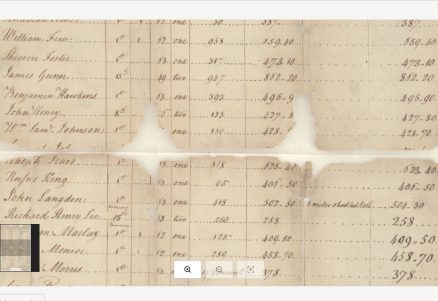
Students will use the data in this 1791 table of compensation data for Senators in the third session of the first Congress to determine how much Senators were paid per day and how much they were compensated per mile of travel to the capital city, located at this time in Philadelphia, PA. Students will also consider the source of the document and issues involved in determining compensation for those involved in the early Republic.
This activity may be used during a lesson about setting up the first government under the new United States Constitution in 1789, as a study of one of the three locations hosting the U.S. capital from 1789 to the present, or to introduce a discussion about notions of compensation for public service. For grades 7-12. Approximate time needed is 45 minutes.
Ask students to consider how much those involved in public service or working for the government should be paid. Ask them to reflect on what factors they would consider in determining a suitable amount. As a class, compile a list of possible considerations.
Use this activity as a class, in small groups, in pairs, or individually. Direct students to read the tasks in the activity, perform the calculations, and then label the document with their answers. Senators were paid $6 per day and $0.30 per mile of travel. Students can calculate the daily pay rate based on Robert Morris. Since he lived in Philadelphia, he did not have to travel to the capital; his total compensation did not include travel pay.
When students have clicked “When You’re Done,” they’ll be asked to respond to the follow-up questions. Then engage them in a class discussion that could include:
- Was this pay the appropriate amount?
- Did it make sense to pay them by the day?
- How was both public service and travel different in 1789 than today?
- Who do you think had to determine this rate of pay and what factors did they likely take into consideration?
For further background information and teaching suggestions, see the article “Draft of the U.S. Constitution (August 1787) and Schedule of the Compensation of the Senate of the United States (March 1791)” in the January/February 2011 National Council for the Social Studies (NCSS) publication Social Education.
Find a table showing the history of senators’ pay and more information about the history of the U.S. Senate on www.senate.gov. See www.gsa.gov/mileage for current mileage reimbursement rates for federal employees. Explore the first Congress’ journals and debates about pay, and other topics relevant to creating a new government, on the Library of Congress’ Century of Lawmaking web site. For information about choosing the nation’s capital see the National Archives Treasures of Congress online exhibit.

To the extent possible under law, National Archives Foundation has waived all copyright and related or neighboring rights to “Senators’ Pay in the First Congress”
Description
In this activity, students will analyze a 1791 U.S. Treasury document to find relevant historical data and calculate how much United States Senators were paid in the first Federal Congress.