

Safe for Kids? Consumer Complaints and the Regulation of Toys

Making Connections
Share to Google Classroom
Recommended Activity
Published By:
National Archives Foundation
Historical Era:
Postwar United States (1945 to early 1970s)
Thinking Skill:
Historical Analysis & Interpretation
Bloom’s Taxonomy:
Analyzing
Grade Level:
High School
Suggested Teaching Instructions
This activity can be used in a unit that explores the post-World War II era, the baby boom, and government regulation. For grades 6-12. Approximate time needed is 40-50 minutes.
To begin, ask students what was their favorite toy as a young child. Ask students to describe the toy physically and any potential safety hazards it might have had. For example, certain toys may include small parts that may present a choking hazard.
Inform students that they will be analyzing letters and excerpts from letters from the mid-20th century related to toy safety issues. These letters were sent to federal regulatory agencies and the excerpts were introduced into hearings of a congressional subcommittee.
Share the following historical context, if necessary.
Between the end of World War II and the early-1960s, the Baby Boom fueled the rapid expansion of the toy industry. While most of these toys were perfectly safe for kids, others attracted negative attention from physicians, consumer advocates, and the parents of injured children. As U.S. families became more anxious about the safety of their children, policymakers passed multiple laws (including the Child Protection Act) protecting kids from a variety of issues.
Despite several shortcomings, the Child Protection Act led to the appointment of the National Commission on Product Safety in 1968. The Commission was charged with assessing the extent to which available products posed unreasonable hazards to the buying public and focused on threats to children. According to estimates from the U.S. Public Health Service, toys accounted for 700,000 injuries and numerous deaths per year.
Letters complaining about dangerous toys were sent to a variety Federal agencies and commissions, including the Consumer Product Safety Commission (CPSC). They serve as invaluable resources for learning about the toy safety crisis of the 1960s and 1970s. The troubling experiences of children and their families not only showcased the hidden risks of contemporary toys but also contributed to new laws regulating the safety of consumer products.
Direct students to the initial document, the letter from Mrs. Morgan to the Consumer Research Bureau. Model document analysis. Click “View Document Details” to see it more closely and to read the additional pages.
As they read the letters, they should consider the following questions and enter their responses in the blank box that follows each document:
- How did the writer describe his/her experience with unsafe toys? How were these experiences different from similar accounts of product-related accidents from doctors, lawyers, engineers, and lawmakers?
- Why did this writer decide to complain to the government about risky toys? What were his/her other options?
- What can we learn from looking at these letters that would be difficult to learn from a summary or even a word-for-word transcript?
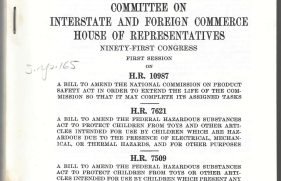
After completing analysis of the letters, direct students to move on to the excerpts that were introduced into the Hearings before the Subcommittee on Commerce and Finance about Toy Industry. Click “View Primary Source Details” to see it more closely and to read the additional pages.
As they read the excerpts, they should consider the following questions and enter their responses in the blank box that follows each document:
- What information and quotations did the National Commission on Product Safety choose to push for the act? Would you have used the same evidence to convince Congress to intervene? Why or why not?
- Look closely at the complaints cited by the Commission. Where did these letters come from? Who were the intended recipients of these messages? How did the staff of the Commission edit their tone and content?
- What do these letters and the Commission report show about the ways ordinary Americans can influence the policymaking process?
After discussing their results, direct students to the “When You’re Done” section. Allow students to choose one of the following options:
- Option A: Imagine that a child has been injured playing with one of the following toys: an archery set with pointed arrows, a miniature electric iron, or a baby rattle filled with small beads. Write a letter to the Consumer Product Safety Commission describing the accident and pushing the agency to remove the toy from the market. As you write, reflect on how you would feel about the injury, the businesses selling the toy, and your role as an informed citizen-consumer.
- Option B: Browse the list of recalls and safety warnings on the Consumer Product Safety Commission website (CPSC.gov/recalls). Choose one of the items on the Commission “product safety warnings” webpage. Prepare a short (5-minute) presentation explaining why this product might be hazardous, where the product was sold, any reported injuries involving the product, and what consumers should do to prevent future accidents.
This activity and the historical context was adapted from Safe for Kids? Using Consumer Complaints to Teach How Parents Contributed to the Regulation of Risky Toys, c. 1965–1975 from the National Archives’ Teaching with Documents feature in Social Education.

To the extent possible under law, National Archives Foundation has waived all copyright and related or neighboring rights to “Safe for Kids? Consumer Complaints and the Regulation of Toys”
Description
In this activity, students will read and analyze letters that were sent to federal regulatory agencies and excerpts from letters that were introduced into hearings of a congressional subcommittee related to the toy industry and safety issues.
Share this activity with your students
Documents in this Activity
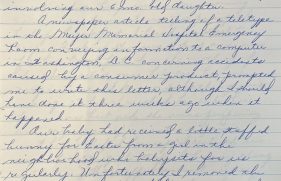
Letter from Evelyn Buckley about Toy Easter Bunny
Contemporary United States (1968 to the present)
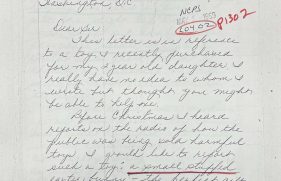
Letter from Mrs. Frank Morgan to Consumer Research Bureau
Contemporary United States (1968 to the present)