


Ports of Immigration: Angel Island and Ellis Island

Mapping History
Share to Google Classroom
Recommended Activity
Published By:
National Archives Foundation
Historical Era:
The Emergence of Modern America (1890-1930)
Thinking Skill:
Historical Comprehension
Bloom’s Taxonomy:
Understanding
Grade Level:
Middle School
Suggested Teaching Instructions
This activity can be used during a unit on immigration to introduce Ellis Island and Angel Island, and immigration patterns in the late 19th and early 20th centuries. For grades 6-8. Approximate time needed is 60 minutes.
In this activity, students will be able to:
- Match photographs of Ellis Island and Angel Island to their locations in the United States
- Analyze immigration documents and reports
- Gain an understanding of the immigration process, particularly why people decided to immigrate to the United States and reasons for being denied entry
- Gain a better understanding of America’s connection to the rest of the world
Begin by discussing the definition of the word immigration with students. The following questions can help provide a general idea:
- Is it someone who stays for a short period of time, a long period of time, or permanently?
- How did people immigrate to another country? Was there a process? Did they need approval or permission from their home country?
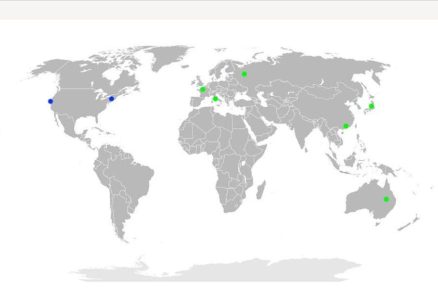
Direct students to begin the activity individually or in pairs. Students should move the photographs of Ellis Island and Angel Island to their correct locations on the map. Then they should read and analyze each document and move it to the location on the map that corresponds to the country of departure for the immigrant (not necessarily their home country). (Note that the report from a U.S. immigration officer – the Cowen Report – about why people were leaving their home country can be placed in the country that it was written about: Russia)
The matches will be:
- A Group of Immigrants Outside a Building on Ellis Island – New York
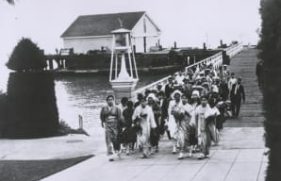
- Immigrants Arriving at the Immigration Station on Angel Island – California
- Introduction to the Cowen Report – Russia
- Emmeline Pankhurst’s Questioning at Ellis Island – France
- Ellis Island Special Inquiry Regarding Deportation of Giuseppe Giorni – Italy
- Application to Enter the United States from Peter Halfke – Australia
- Affidavit of Ngim Ah Oy Filed with the United States Consulate in Hong Kong – Hong Kong
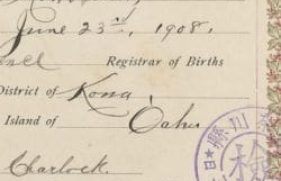
- Certificate of Birth of Kaoru Shiibashi – Japan
After students have placed all of the documents on the map, they should click on “When You’re Done” and answer the questions. Discuss their answers to the questions as a class:
- Based on the documents, what part of the world did people who passed through Ellis Island come from?
- Based on the documents, what part of the world did people who passed through Angel Island come from?
- What were some of the reasons why immigrants wanted to enter the United States?
- What were some of the reasons immigrants were denied entry into the United States?
Finish with a class discussion or group discussions using some combination of the following:
- What would make you want to leave your home country and live in another country?
- What items would you take with you on this new life in another country?
- How do you think you would feel during this whole process?
- What would be the first things you would do when entering a new country to live?
- Thinking back to question #4 from the “When You’re Done” section, do you think those were good reasons to deny immigrants entry into the United States?
- How would you feel if you traveled all the way to a new country and were denied entry?
Note: The people included in this activity who came from Italy, France, and Australia were denied entry. The Cowen Report documents why Jews were immigrating from Russia. The people immigrating from Hong Kong and Japan were denied entry, but then later admitted due to appeals.

To the extent possible under law, National Archives Foundation has waived all copyright and related or neighboring rights to “Ports of Immigration: Angel Island and Ellis Island”
Description
In this activity, students will identify the location of two ports of entry – Ellis Island and Angel Island – and analyze immigration documents to uncover where immigrants came from and why they wanted to live in the United States.
Share this activity with your students
Documents in this Activity
Certificate of Birth of Kaoru Shiibashi
The Emergence of Modern America (1890-1930)
Immigrants Arriving at the Immigration Station on Angel Island
The Emergence of Modern America (1890-1930)

Application to Enter the United States from Peter Halfke
The Emergence of Modern America (1890-1930)