


Political Cartoon Analysis: No Taxation Without Representation (Amanda Aoun)

Discussion Topic
Share to Google Classroom
Published By:
Amanda Aoun
Historical Era:
Revolution and the New Nation (1754-1820s)
Thinking Skill:
Historical Analysis & Interpretation
Bloom’s Taxonomy:
Analyzing
Grade Level:
Middle School, High School
Suggested Teaching Instructions
Use this activity at the beginning of a unit on the American Revolution when introducing or reviewing the causes of the Revolutionary War.
Introduce students to the concept of taxation, making sure to explain why governments collect tax and how it is used. Then connect it to their own lives today. For example, improving transportation by building roads, bridges, and subways; providing free public education; and providing for safety and defense (police, army, etc.).
Ask students, “What are other ways taxes can support the welfare and well-being of citizens, the public good, or national interests?”
Remind students that as a result of the French and Indian War, Great Britain had huge debts (approximately 150 million pounds, equivalent to 30 trillion dollars today) and they used taxation to help pay these debts. They expected British subjects both in Great Britain and in the colonies to help pay for this debt. Ask students:
- How might colonists have benefited from being protected during and after the French and Indian War?
- Did the benefits and protections received justify the money collected in taxes?
Introduce and discuss the famous colonial phrase: “no taxation without representation.” Ask students to explain what this slogan meant. If required, define the term “representation.” Inform students that this phrase would become one of the grievances included in the Declaration of Independence.
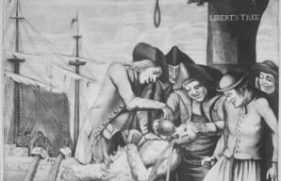
Introduce the political cartoons. Ask students to study the images and use them to explain how the colonists’ grievances about Parliament’s different acts may have led to the actions depicted.
Use the following questions to assist students in completing their image analysis:
- What people, objects, animals, or symbols do you see? List 4 from each.
- What issue, event, or idea is the cartoon commenting on? How do you know?
- What symbols are used? What do they represent in the context of the American Revolution?
- Does the artist seem to support the American colonists, the British, or another group? Explain your reasoning.
- Is the cartoon serious, mocking, exaggerated, or satirical? How can you tell?
After students analyze the images, direct attention to the conclusion question in the “When You’re Done” section:
- What do the political cartoons teach us about how people used protest and propaganda to share ideas and influence others?
This activity was adapted from “Colonial Response to Taxation” in the New York City Department of Education’s Passport to Social Studies, Grade 7, Unit 2, Lesson 2 (pg. 79-88).

To the extent possible under law, Amanda Aoun has waived all copyright and related or neighboring rights to “Political Cartoon Analysis: No Taxation Without Representation (Amanda Aoun)”
Description
In this activity, students will analyze the colonial grievances that led to the American Revolution through political cartoons.