


Patent Analysis: Lizzie Magie’s Board Game

White Out/Black Out
Share to Google Classroom
Recommended Activity
Published By:
National Archives Foundation
Historical Era:
The Emergence of Modern America (1890-1930)
Thinking Skill:
Historical Analysis & Interpretation
Bloom’s Taxonomy:
Analyzing
Grade Level:
Upper Elementary
Suggested Teaching Instructions
This activity can be used during a unit on inventions and innovations or to build document analysis skills in younger students. For grades grades 3-6. Approximate time needed is 15 minutes.
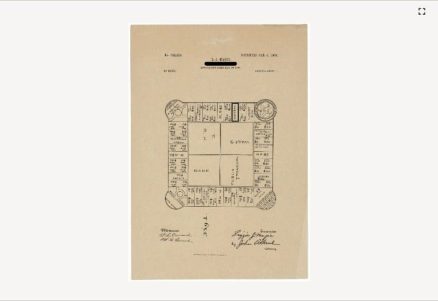
Ask students to look at the partially obscured patent drawing. Without providing any context, model document analysis:
- Quickly scan this document. What do you notice first?
- Describe the document and the invention it depicts as if you were explaining it to someone who can’t see it.
- Based on what you can see, what do you think is the purpose of this invention? List evidence from the document to explain your opinion.
After some discussion, reveal that this is a patent drawing for a popular children’s game. If students are unaware of the definition of a patent, provide a brief definition that a patent gives an inventor a temporary exclusive right to profit from his or her invention. Explain how in the United States, the Constitution gave Congress the power to “To promote the progress of science and useful arts by securing for limited times to authors and inventors the exclusive right to their respective writings and discoveries” in Article I, Section 8.
Ask students to offer educated guesses as to the specific invention. If no one guesses game board or Monopoly, provide the following clues from Liz Magie’s description of her invention:
- “The object of the game is to obtain as much wealth or money as possible, the player having the greatest amount of wealth at the end of the game…being the winner.”
- “Each time a player goes around the board…he receives his wages, one hundred dollars…”
- “When a player stops upon a lot owned by any of the players, he must pay the rent to the owner.”
Following a brief discussion and potential guesses, provide the following context for the invention:
Lizzie J. Magie, a citizen of Brentwood, Maryland, submitted this familiar-looking game design as a way to demonstrate economist Henry George’s concept of a single-tax, which was a popular idea being proposed for use in the United States.
Dubbed the Landlord’s Game, the ultimate object of the game is to become the wealthiest player while accumulating as much money as possible. And why is this so familiar? In 1935, another game based off of Magie’s board design was patented: Monopoly.
After sharing the historical context, discuss with students how the game has changed over time, and possible positive and negative effects of this invention.

To the extent possible under law, National Archives Foundation has waived all copyright and related or neighboring rights to “Patent Analysis: Lizzie Magie’s Board Game”
Description
In this activity, students will analyze the patent drawing for Liz Magie’s Game Board for the Landlord’s Game, which was a forerunner for the popular board game Monopoly.