

Patent Analysis: Alexander Graham Bell’s Telephone

White Out/Black Out
Share to Google Classroom
Recommended Activity
Published By:
National Archives Foundation
Historical Era:
The Development of the Industrial United States (1870-1900)
Thinking Skill:
Historical Analysis & Interpretation
Bloom’s Taxonomy:
Analyzing
Grade Level:
Upper Elementary
Suggested Teaching Instructions
This activity can be used during a unit on communication, inventions and innovations, and/or to build document analysis skills in younger students. For grades grades 3-6. Approximate time needed is 15-20 minutes.
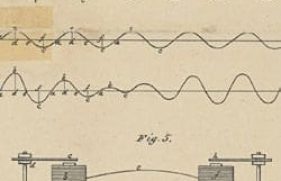
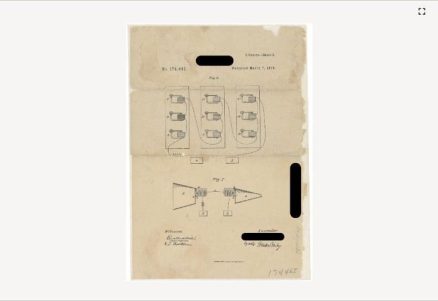
Ask students to look at the partially obscured patent drawing. Without providing any context, model document analysis:
- Quickly scan this document. What do you notice first?
- Describe the document and the invention it depicts as if you were explaining it to someone who can’t see it.
- Based on what you can see, what do you think is the purpose of this invention? List evidence from the document to explain your opinion.
After some discussion, reveal that this is a patent drawing for an important invention. If students are unaware of the definition of a patent, provide a brief definition that a patent gives an inventor a temporary monopoly on his or her invention. Explain how in the United States, the Constitution gave Congress the power to “To promote the progress of science and useful arts by securing for limited times to authors and inventors the exclusive right to their respective writings and discoveries” in Article I, Section 8.
Ask students to offer educated guesses as to the specific invention. If no one guesses telephone, provide the following clues from the inventor’s description of the invention.
- “My present invention consists in the employment of a vibratory or undulatory cur rent of electricity in contradistinction to a merely intermittent or pulsatory current, and of a method of, and apparatus for, producing electrical undulations upon the line-wire…”
- “…many other uses to which these instruments may be put, such as the simultaneous transmission of musical notes, differing in loudness as well as in pitch, and the telegraphic transmission of noises or sounds of any kind…”
- “The method of, and apparatus for, transmitting vocal or other sounds telegraphically, as herein described, by causing electrical undulations, similar in form to the vibrations of the air accompanying the said vocal or other sound…”
Following a brief discussion and potential guesses, provide the following context for the invention. As you provide this information, ask if students can guess the invention.
The inventor of this device was born in Scotland and moved to Boston in 1872 to open a school for teachers of the deaf.
His early experiments included ways to improve and use telegraphy. The telegraph conveyed messages through a system of electrical sounds that, when decoded, could be translated into words. It was dependent on skilled technicians and never became a home appliance. Rather, it required you to go to a telegraph office to send or receive a message, or perhaps a messenger did this for you.
Bell sought something revolutionary: to transmit not only the sound of the human voice, but audible words. With this invention, Bell wrote in 1878, “It is possible to connect every man’s house, office or factory with a central station, so as to give him direct communication with his neighbors.”
After sharing the historical context, ask students to brainstorm the impact of the telephone throughout history since the 1870s.
- How is it used today?
- How has it changed over time?
- What positive effects has this invention had?
- What negative effects has this invention had?

To the extent possible under law, National Archives Foundation has waived all copyright and related or neighboring rights to “Patent Analysis: Alexander Graham Bell’s Telephone”
Description
In this activity, students will analyze Alexander Graham Bell’s patent drawing for an improvement in telegraphy, more commonly considered as the invention of the telephone.