

Lowering the Voting Age: Nixon and the 26th Amendment

Discussion Topic
Share to Google Classroom

Recommended Activity
Published By:
National Archives Foundation
Historical Era:
Across Eras: Civics & Government
Thinking Skill:
Historical Analysis & Interpretation
Bloom’s Taxonomy:
Evaluating
Grade Level:
High School
Suggested Teaching Instructions
In this activity, students will analyze a primary source document, learn more about the 26th Amendment and the road to its ratification, and think critically about voting rights. For grades 9-12. Approximate time needed is 30 minutes.
First, if needed, provide additional background on the history of voting rights and Constitutional Amendments. The text of the 26th Amendment simply reads:
Section 1. The right of citizens of the United States, who are eighteen years of age or older, to vote shall not be denied or abridged by the United States or by any State on account of age.
Section 2.The Congress shall have power to enforce this article by appropriate legislation.
Review or familiarize students with the history of the push to lower the voting age. The activity will inform students that in April 1970, Congress lowered the voting age to 18 as part of legislation to extend the Voting Rights Act of 1965, but that the effort to lower the age had begun decades earlier: “Old enough to fight, old enough to vote,” was a slogan first heard during World War II, adopted again by student activists during the Vietnam War. In December 1970, the Supreme Court ruled that the government had overstepped its legislative bounds. Congress quickly passed legislation proposing the 26th Amendment; and it was ratified by the states in 100 days.
To begin the activity, allow students several minutes to explore the document individually or in small groups. Remind students to consider the discussion questions provided. If you prefer, have students write down their answers.
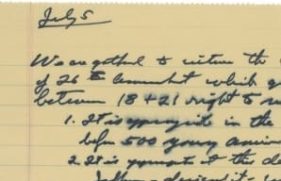
After students have completed their own investigation, discuss the questions as a class. Encourage students to use their imaginations and put themselves in the place of President Nixon. Ask them what they liked about his remarks and encourage them to think of things they would have changed.
After exploring these initial questions, instruct students to click “When You’re Done” where they can enter their responses to the question:
- How have young voters made a difference in American politics?

To the extent possible under law, National Archives Foundation has waived all copyright and related or neighboring rights to “Lowering the Voting Age: Nixon and the 26th Amendment”
Description
This activity encourages students to think critically about the history and importance of the 26th Amendment, that granted the right to vote to American citizens aged 18 or older.