

Lincoln’s Suspension of Habeas Corpus During the Civil War

Spotlight
Share to Google Classroom
Recommended Activity
Published By:
National Archives Foundation
Historical Era:
Civil War and Reconstruction (1850-1877)
Thinking Skill:
Historical Analysis & Interpretation
Bloom’s Taxonomy:
Analyzing
Grade Level:
High School
Suggested Teaching Instructions
This activity can be used in a unit on the Civil War or in a civics or government class when studying the Constitution and separation of powers. For grades 9-12. Approximate time needed is 30 minutes. Students may complete the activity individually, in pairs, or in a full-class setting.
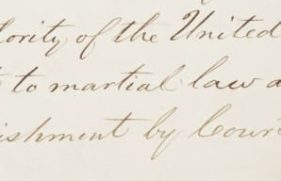
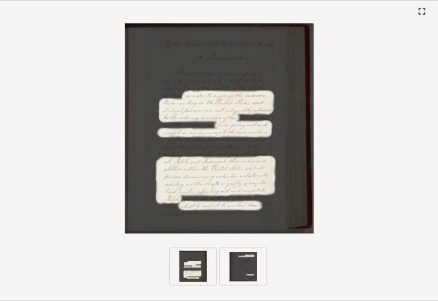
Ask students to begin the activity or display the activity for the full class. They will be prompted to carefully analyze President Lincoln’s Presidential Proclamation 94 that suspended the writ of habeas corpus. Highlighted text will guide them to the most pertinent parts. They can click on “View Primary Source Details” to read the full document as well as a transcription. (If doing the activity in a full class setting, you may wish to distribute the document at the beginning of the activity or ahead of time.)
Students should answer the following discussion questions provided:
- How would you describe Lincoln’s language?
- How are members of the Confederacy categorized?
- How does Lincoln justify enacting martial law and suspending habeas corpus?
- Is his suspension justified by the wording in Article 1, Section 9 of the Constitution?
- If you were a Supreme Court Justice would you rule Lincoln’s suspension constitutional or unconstitutional?
When they have finished, they should click on “When You’re Done,” where they will learn more about the suspension of the writ of habeas corpus during the Civil War: In 1861, in the case Ex Parte Merryman, Supreme Court Chief Justice Roger Taney had issued a ruling stating that the authority to suspend habeas corpus lay exclusively with Congress. Lincoln refused to abide by the ruling.
Students should respond to the questions provided:
- The Constitutional provision of separation of powers grants the Supreme Court the power to interpret laws and the President the power to enforce them. What are the constitutional implications when the President refuses to enforce Supreme Court decisions?
- Did the ends justify the means in this case – Lincolns suspension of the writ of habeas corpus during the Civil War?
- Do you know of other historical examples of a President’s hesitation to enforce a Supreme Court ruling?
Conduct a class discussion based on students’ answers.

To the extent possible under law, National Archives Foundation has waived all copyright and related or neighboring rights to “Lincoln’s Suspension of Habeas Corpus During the Civil War”
Description
In this activity, students will learn President Abraham Lincoln’s justification for suspending the writ of habeas corpus in 1862 during the Civil War. This activity provides the opportunity for students to consider the role of the Supreme Court in interpreting the law of the Constitution and the role of the President as the Commander in Chief of the Army and enforcer of the law. When pairing this activity with the historical context and Ex Parte Merryman Supreme Court ruling, students can understand the role separation of powers plays in our government.