

How Effective were the Efforts of the Freedmen’s Bureau?

Weighing the Evidence
Share to Google Classroom
Recommended Activity
Published By:
National Archives Foundation
Historical Era:
Civil War and Reconstruction (1850-1877)
Thinking Skill:
Historical Issues-Analysis & Decision-Making
Bloom’s Taxonomy:
Evaluating
Grade Level:
Middle School, High School
Suggested Teaching Instructions
Learning Objectives: Students will be able to identify and draw conclusions about the roles of the Freedmen’s Bureau (Bureau of Refugees, Freedmen, and Abandoned Lands), critically analyze primary sources, formulate opinions about the effectiveness of the Bureau, and back up their opinions verbally or in writing.
Instructions: This activity may be used to introduce, or as a wrap-up to, the study of the Freedmen’s Bureau. The activity can be completed as a class, in small groups, in pairs, or individually. For grades 6-12. Approximate time needed is 50 minutes.
Remind students that President Lincoln’s issuance of the Emancipation Proclamation, the defeat of the Confederate Army, and the passage of the 13th Amendment resulted in the freeing of approximately four million African Americans. Upon being freed, the formerly enslaved persons faced many challenges. As a warm-up activity, ask students to consider the following questions:
- What did these people need once slavery ended?
- What did they want after being freed?
- What resources did they have to meet needs and wants?
- Which of their needs and wants were tangible? Which were intangible?
Encourage students to think about their responses to these questions throughout this activity.
Open the activity and choose one of the documents. Model careful document analysis, concluding with the following question:
- Did anything surprise you about the conditions the formerly enslaved persons were facing, the institution of slavery, or the Freedmen’s Bureau? Ask them to share their thoughts.
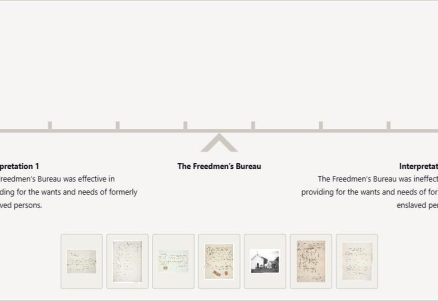
Demonstrate how the scale works. Explain to students that they will place the photograph and textual documents on the scale based on their careful document analysis.
Following completion of the activity, conduct a class discussion based on the questions found on the final screen (or ask students to reflect on these in small groups or in writing). Possible responses about the job of the Freedmen’s Bureau might include:
- legalizing marriages,
- supplying necessities such as food and clothing,
- promoting education,
- witnessing labor contracts between the freedmen and plantation owners or other employers,
- and settling freedmen on abandoned or confiscated land.
This is an opportunity to examine the content of the documents even more critically. The class can discuss if the measures implemented by the Freedmen’s Bureau really helped formerly enslaved persons or if they helped only in name. Ask students, for instance, if the labor contracts that they saw in fact advanced the rights of the individuals involved or if they maintained the antebellum status quo. Discuss what needs would have been most pressing for formerly enslaved persons (material and physical supplies or political rights). This discussion will inform students’ determinations about the effectiveness of the Freedmen’s Bureau and may cause them to reconsider which interpretation they felt the documents supported.
For more information, see the Freedmen’s Bureau research page or links to Freedmen’s Bureau resources from the National Archives, or resources from Howard University.

To the extent possible under law, National Archives Foundation has waived all copyright and related or neighboring rights to “How Effective were the Efforts of the Freedmen’s Bureau?”
Description
In this activity, students will analyze documents from the War Department’s Bureau of Refugees, Freedmen, and Abandoned Lands — better known as the Freedmen’s Bureau — that Congress established on March 3, 1865, as the Civil War was coming to an end. Using the scale in Weighing the Evidence, students will evaluate the effectiveness of the Freedmen’s Bureau in assisting formerly enslaved persons.
Share this activity with your students
Documents in this Activity
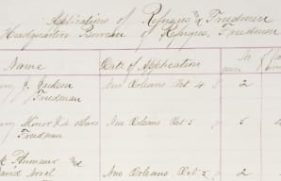
Applications of Freedmen for Land
Civil War and Reconstruction (1850-1877)
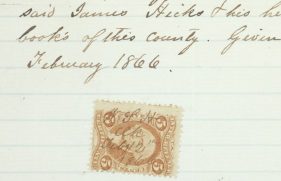
Certificate of Land for James Hicks
Civil War and Reconstruction (1850-1877)
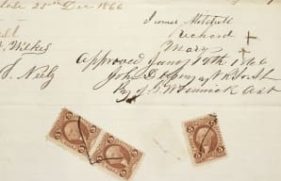
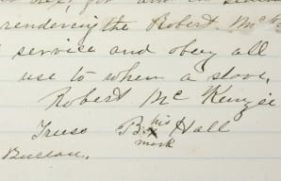
Contract Between James Mitchell and Dick and Wife
Civil War and Reconstruction (1850-1877)