

From Dred Scott to the Civil Rights Act of 1875: Eighteen Years of Change

Making Connections
Share to Google Classroom
Recommended Activity
Published By:
National Archives Foundation
Historical Era:
Civil War and Reconstruction (1850-1877)
Thinking Skill:
Historical Analysis & Interpretation
Bloom’s Taxonomy:
Analyzing
Grade Level:
High School
Suggested Teaching Instructions
Use this activity toward the end of units on the Civil War and Reconstruction. Students should know the basic timeline of events from just before the Civil War through just before the end of Reconstruction. Students in grades 10–12 may work individually or in small groups. Approximate time needed is 30 minutes.
Learning Objectives: Students will explain the relationship between sequential events starting with the Dred Scott decision and ending with the Civil Rights Act of 1875.
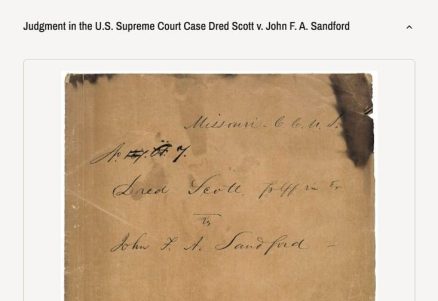
Instructions: Ask students to recall the Dred Scott Decision of 1857 and its conclusion: that African-Americans were not citizens and that the Federal government could not prevent slavery from being taken into the territories. Then have them consider the rights the Federal government granted African-Americans by 1875: citizenship, the right to vote, equal access to public facilities.
Direct students to examine or identify each document and then explain the connection between each document by recording the relationship in the appropriate connecting “Relationship Between Adjacent Documents” box. The connection may be cause-and-effect (for example, Lincoln’s elections led to South Carolina secession), or maybe just sequential (the ending of slavery with the 13th Amendment led to the 14th Amendment granting citizenship).
Possible Answers for Enter Your Response Boxes:
- Response Box 1: The Dred Scott Decision allowed for the expansion of slavery into the territories. Lincoln was elected on the platform of stopping the expansion of slavery into the territories.
- Response Box 2: South Carolina seceded in reaction to the election of President Lincoln.
- Response Box 3: This proposed 13th amendment of 1861 was not ratified, but would have prevented the abolition of slavery by the Federal government in hopes of bringing the seceded states back into the Union.
- Response Box 4: Lincoln, by the fall of 1862, was looking to broaden the meaning of the war to include the ending of slavery, but was hoping for a military victory to do so. With the Union “victory” at Antietam, he issued the Emancipation Proclamation freeing only those enslaved in the states in rebellion.
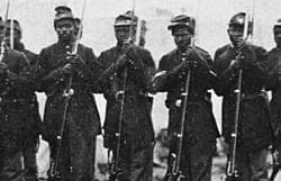
- Response Box 5: Shortly after the Emancipation Proclamation, African-American soldiers were allowed to join the Union Army.
- Response Box 6: Towards the end of the war, the 13th Amendment was proposed and ratified outlawing slavery in the United States. After the war, the 13th Amendment was followed with the ratification of the 14th Amendment giving citizenship to all born in the United States, thus granting citizenship to the formerly enslaved.
- Response Box 7: The 14th Amendment was followed by the 15th Amendment, giving the right to vote to the formerly enslaved.
- Response Box 8: With the end of slavery, and citizenship and voting rights granted to the formerly enslaved, the Civil Rights Act of 1875 gave equal access to public facilities to the once enslaved.
Once students have completed the activity, ask them to click “When You’re Done” and reflect on the rate at which these changes occurred between 1857 and 1875. The speed was phenomenal considering how little change or social improvement African-Americans were able to make in the prior 250 years.
Encourage classroom discussion about the reactions to these changes:
This quick pace was not well-received by others in the country. In 1883, the U.S. Supreme Court found the Civil Rights Act of 1875 unconstitutional. And by the 1890s, many Southern states had either re-written or changed their state constitutions with unique ways to deny African-Americans the right to vote. Although the fight to retain them continued, these rights granted in the 1860s and 1870s were not strongly re-established until the 1960s and beyond.
As an optional extension assignment, ask each student to select three documents (or the events they represent) from this activity that they consider to have had the most impact on the Civil Rights Movement of the 20th Century and compose a five-paragraph essay to support their argument.

To the extent possible under law, National Archives Foundation has waived all copyright and related or neighboring rights to “From Dred Scott to the Civil Rights Act of 1875: Eighteen Years of Change”
Description
In 1857, the U.S. Supreme Court ruled in the Dred Scott decision that African-Americans were not citizens of the United States. Yet within 18 years, Black Americans would not only have citizenship, but would be guaranteed the right to vote and equal access to transportation, housing, and other facilities by the Civil Rights Act of 1875. Although many of these rights would be lost through the rulings of the U.S. Supreme Court in 1883, when the Civil Rights Act of 1875 was found unconstitutional, and in 1896, when the Plessy v. Ferguson ruling established the “separate but equal” doctrine, these gains made in the 1860s and 1870s were foundational to the Civil Rights progress of the latter 20th century.
In this activity, students will examine sequential primary sources relating to the events that led to this change and write eight short descriptions explaining the relationships between the historical events.
Share this activity with your students
Documents in this Activity

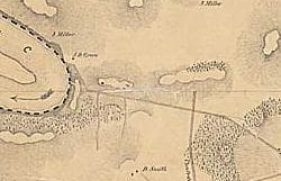
Map of the Battle of the Antietam fought on the 16th and 17th September 1862 between the United States Forces under the Command of Maj. Genl. Geo. B. McClellan and the Confederates under Genl. Robt. E
Civil War and Reconstruction (1850-1877)
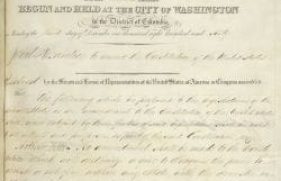
Proposed Thirteenth Amendment Regarding the Abolition of Slavery
Civil War and Reconstruction (1850-1877)