


Ernest Hemingway: Life and Works

Seeing the Big Picture
Share to Google Classroom
Recommended Activity
Published By:
National Archives Foundation
Historical Era:
Across Historical Eras
Thinking Skill:
Historical Comprehension
Bloom’s Taxonomy:
Analyzing
Grade Level:
Middle School
Suggested Teaching Instructions
This activity can be used to examine the connections between the life and fictional works of Ernest Hemingway. For grades 6-12. Approximate time needed is 20-30 minutes.
Explain to students that, though not a memoirist, the life experience of Ernest Hemingway informed the works of fiction he created throughout his life.
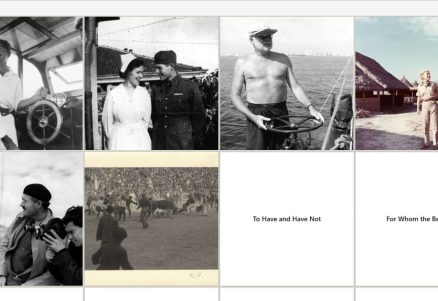
Ask students to begin and complete the activity on their own or in small groups, performing similar analysis with each photograph that they click on. The activity will instruct students to match the photograph with the correct work of fiction’s title. Direct students to note the setting of the photographs (both time and place), and the activities and events in Ernest Hemingway’s life that are being shown, to be able to effectively match them with the related fictional work.
If necessary, students can reference the article “Hemingway on War and Its Aftermath,” published in the National Archives’ Prologue magazine, or the biographical note on Hemingway in the National Archives Catalog to provide additional context to his life.
After students make all of the matches, they will see a photograph of Ernest Hemingway receiving the Nobel Prize in Literature in 1954. In the “When You’re Done” section, students will learn that this was given to him “for his mastery of the art of narrative, most recently demonstrated in The Old Man and the Sea, and for the influence that he has exerted on contemporary style.”
Direct students to the conclusion question:
- Based on the photographs and what you know about Ernest Hemingway’s life and fiction, which work do you think was the most autobiographical? Why?

To the extent possible under law, National Archives Foundation has waived all copyright and related or neighboring rights to “Ernest Hemingway: Life and Works”
Description
In this activity, students will review and analyze photographs from times in Ernest Hemingway’s life that informed some of the most important works of fiction.
Share this activity with your students
Documents in this Activity
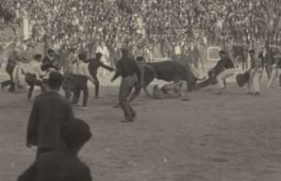
Ernest Hemingway Fighting a Bull in Pamplona, Spain
The Emergence of Modern America (1890-1930)

Ernest Hemingway Receiving his 1954 Nobel Prize for Literature
Postwar United States (1945 to early 1970s)