

Effects of Food Regulation in the Progressive Era (edited by Peggy Lehman)

Finding a Sequence
Share to Google Classroom
Published By:
Peggy Lehman
Historical Era:
The Emergence of Modern America (1890-1930)
Thinking Skill:
Chronological Thinking
Bloom’s Taxonomy:
Applying
Grade Level:
Middle School
Suggested Teaching Instructions
Learning Objectives
Students will analyze textual documents and photographs. They will compare and contrast food manufacturing conditions before and after the Pure Food and Drug Act and the Meat Inspection Act were passed in 1906 and took effect in 1907. They will identify contextual and specific dates for documents and put them in the correct sequence. For grades 6-8. Approximate time needed is 20 minutes.
Instructions
This activity can be used to introduce early food regulation laws in the United States while teaching about the Progressive Era, or the history of government regulation or consumer protection.
Students can work individually or in pairs. Ask them to begin the activity by reading the introduction. Students will be reminded that muckraking during the Progressive Era, by reformers like Upton Sinclair, brought harmful food manufacturing practices to Americans’ attention. Congress passed the Pure Food and Drug Act and the Meat Inspection Act in 1906. President Theodore Roosevelt signed them into law and they started taking effect in 1907. The laws required sanitary conditions in factories and inspections of animals to be eaten, and banned the making and selling of “adulturated” food and medicine.
Ask students to closely examine each document at the top of the screen: evaluate the conditions being shown or described, and determine if they were more likely to have existed before or after the laws took effect. Ask students to put the documents in the correct chronological sequence. Direct them to place the Pure Food and Drug Act according to when it took effect (1907) rather than the date it was signed into law (June 30, 1906).
- What 5 adjectives would you use to describe the food industry before these laws were passed?
- What 5 adjectives would you use to describe the food industry after these laws were passed?
- How would you describe the food industry before these laws were passed in general?
- How would you describe the food industry after these laws were passed in general?
- Why do you think more photographic evidence exists for after the legislation than before the legislation?
- Why do you think there were lingering complaints about food even after the laws were passed?
- Do you think food has been more or less regulated since?
Students may speculate that the government was not very involved in controlling food manufacturing before these laws. Though there were some efforts, including a relatively weak food inspection law passed by Congress in 1895, and an 1898 inspection into “embalmed beef” that was allegedly sent to US troops in the Spanish-American War.
Students might suggest that Americans had more concern that their food might make them sick prior to 1906. They may suggest that more photos were taken following the passage of the laws to: prove the usefulness of the laws, because there was more to show off, or that it was simply difficult to document poor conditions beforehand.
Discuss with the class that, though these acts were passed in 1906, issues did not clear up immediately, as is evident in the example of the letter with post cards from South Africa. Also, as years went on, regulations needed to change as new products entered the market. For instance, the 1938 Federal Food, Drug, and Cosmetic Act added cosmetics to the set of federally regulated consumer products.
The U.S. Food and Drug Administration (FDA) is the government body primarily involved in such oversight; for more information about changes in the regulation and legislation over time, see the FDA’s Significant Dates in U.S. Food and Drug Law History.

To the extent possible under law, Peggy Lehman has waived all copyright and related or neighboring rights to “Effects of Food Regulation in the Progressive Era (edited by Peggy Lehman)”
Description
In this activity, students will see and read about the differences in food manufacturing practices before and after the new food laws passed in 1906: the Pure Food and Drug Act and the Meat Inspection Act.
Share this activity with your students
Documents in this Activity
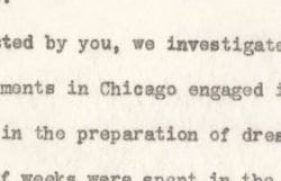
Report on Conditions in the Chicago Stock Yards
The Emergence of Modern America (1890-1930)
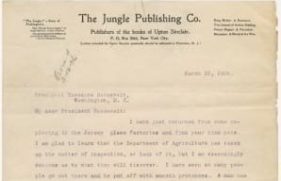
Letter from Upton Sinclair to President Theodore Roosevelt
The Emergence of Modern America (1890-1930)
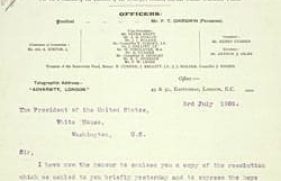
Letter to President Theodore Roosevelt About the Safety of American Beef
The Emergence of Modern America (1890-1930)