


Comparing and Contrasting the Emancipation Proclamation, the 13th Amendment and General Order No. 3

Compare and Contrast
Share to Google Classroom
Recommended Activity
Published By:
National Archives Foundation
Historical Era:
Civil War and Reconstruction (1850-1877)
Thinking Skill:
Historical Issues-Analysis & Decision-Making
Bloom’s Taxonomy:
Analyzing
Grade Level:
Middle School, High School
Suggested Teaching Instructions
This activity is intended to be used in a unit focused on the end of the Civil War and the emancipation of enslaved people. For grades 6-12. Approximate needed time is 45 minutes.
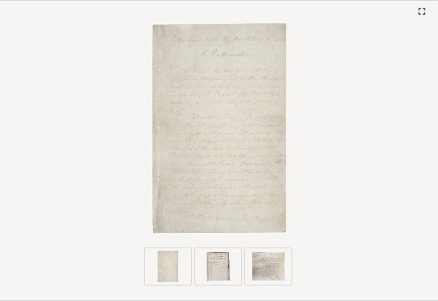
Present the activity to the entire class. Explain to students that they will be looking at three documents related to the end of enslavement in the United States during and shortly after the Civil War. In small groups, prompt students to carefully examine the three documents with the discussion questions provided. Model careful document analysis. If needed, direct students to click on “View Primary Source Details” and then scroll down to read a transcript of the hand-written documents.
Ask students to focus on the similarities and differences in the style, tone, audience, and message of these documents. After reading, discuss these differences. Specific discussion points include:
- What is the main message of the document?
- Describe the overall tone and style of the document.
- Who is the intended audience for the document?
- How does it describe enslaved people and their freedom?
- What does it tell enslaved people to do?
- In what areas of the United States does it apply?
Discuss students’ findings. Answers should focus on the similarities and differences between the three documents. For example:
- The Emancipation Proclamation was a Presidential proclamation issued by President Abraham Lincoln.
- The joint resolution of the 13th Amendment is a Congressional document approved by 2/3 of both houses of Congress.
- General Order No. 3 (the Juneteenth Order) is a military order written in an informal style.
- The Emancipation Proclamation only applied to people enslaved in areas currently in rebellion and they are specifically listed in the proclamation.
- Once approved, the 13th Amendment would apply to all enslaved people across the entire United States.
- General Order No. 3 was issued to the people of Texas and informed them of the existence of the Emancipation Proclamation.
- The Emancipation Proclamation described enslaved people as “all persons held as slaves” and tells them to abstain from all violence (except in self-defense) and to labor for reasonable wages.
- The 13th Amendment describes ending “slavery or involuntary servitude, except as punishment for a crime.”
- General Order No. 3 describes formerly enslaved people as “freedmen” and tells them they have “absolute equality of personal rights and rights of property” and tells them to remain at their homes and work for wages.
After discussing some of the differences, share details from the following historical context if necessary:
In 1863, President Lincoln issued the Emancipation Proclamation declaring “all persons held as slaves within any State, or designated part of a State, the people whereof shall then be in rebellion against the United States, shall be then, thenceforward, and forever free.”
Because it was a military measure, however, the Emancipation Proclamation was limited in many ways. It applied only to states that had seceded from the Union, leaving slavery untouched in the loyal border states. It also expressly exempted parts of the Confederacy that had already come under Union control. Most important, the freedom it promised depended upon Union military victory.
Although the Emancipation Proclamation did not end slavery in the nation, it did fundamentally transform the character of the war. After January 1, 1863, every advance of Federal troops expanded the domain of freedom. Moreover, the Proclamation announced the acceptance of Black men into the Union Army and Navy, enabling the liberated to become liberators. By the end of the war, almost 200,000 Black soldiers and sailors had fought for the Union and freedom.
Lincoln recognized that the Emancipation Proclamation would have to be followed by a constitutional amendment in order to guarantee the abolishment of slavery. On February 1, 1865, President Abraham Lincoln approved the Joint Resolution of Congress submitting the proposed amendment to the state legislatures. The necessary number of states (three-fourths) ratified it by December 6, 1865.
On June 19, 1865, two and a half years after President Abraham Lincoln’s historic Emancipation Proclamation, U.S. Maj. Gen. Gordon Granger issued General Order No. 3, which informed the people of Texas that all enslaved people were now free. Granger commanded the Headquarters District of Texas, and his troops had arrived in Galveston the previous day.
This order represents the Federal Government’s final execution and fulfillment of the terms of the Emancipation Proclamation. The people to whom this order was addressed were the last group of Americans to be informed that all formerly enslaved persons were now free.
The effects of this order would later be celebrated as the “Juneteenth” holiday, a combination of June and nineteenth. It is also called Freedom Day or Emancipation Day, and it is the oldest known celebration commemorating the end of slavery in the United States.
Direct students to the “When You’re Done” section.
- Which document do you think is the most important in freeing enslaved people? Explain.

To the extent possible under law, National Archives Foundation has waived all copyright and related or neighboring rights to “Comparing and Contrasting the Emancipation Proclamation, the 13th Amendment and General Order No. 3”
Description
In this activity students will analyze three documents related to the emancipation of millions of enslaved people in the United States–Abraham Lincoln’s Emancipation Proclamation, the 13th Amendment to the U.S. Constitution, and General Order No. 3 (known as the Juneteenth General Order).
Students will compare and contrast these documents while focusing on the style, tone, audience, and message of these documents to gain a better understanding of how slavery ended during the Civil War.
Share this activity with your students
Documents in this Activity

Joint Resolution Proposing the Thirteenth Amendment
Civil War and Reconstruction (1850-1877)

General Order No. 3 (Juneteenth General Order)
Civil War and Reconstruction (1850-1877)