


Compare and Contrast Versions of the Constitution of the United States

Making Connections
Share to Google Classroom
Recommended Activity
Published By:
National Archives Foundation
Historical Era:
Revolution and the New Nation (1754-1820s)
Thinking Skill:
Historical Analysis & Interpretation
Bloom’s Taxonomy:
Analyzing
Grade Level:
Middle School, High School, College/University
Suggested Teaching Instructions
Originally, under the Articles of Confederation, individual states retained most governing powers. Concerns over their effectiveness soon became evident. The new nation badly needed to pay off its war debts, and there was no method to collect taxes. A supermajority of states was required to pass most laws.
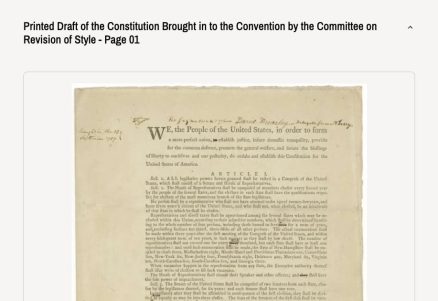
A constitutional convention was called in 1787 to address these challenges. Delegates met at Philadelphia in Independence Hall, where they scrapped the Articles of Confederation and eventually created a new system of government under the United States Constitution. Two printings of the draft of what eventually became the Constitution were provided to the delegates. The copy found in this activity belonged to New Jersey delegate David Brearley Jr., and includes Brearley’s handwritten annotations as the delegates debated.
Timeline
- September 11, 1786 – Annapolis Convention: Spurred by weaknesses in the Articles of Confederation, nine states agreed to send delegates to Annapolis to discuss trade issues. Because of the poor attendance, the delegates decided to have another convention the following year.
- May 25, 1787 – Constitutional Convention: Delegates from 12 states convened in Philadelphia to revise the Articles of Confederation, with Rhode Island not participating. Instead of amending the Articles, delegates drafted and proposed a new government.
- August 6, 1787 – First Draft of the Constitution: The first draft of the Constitution was reported to the Constitutional Convention by the Committee of Detail, was printed for review by the delegates.
- September 13, 1787 – Second Draft of the Constitution: The second draft of the Constitution, reported by the Committee on Style and Arrangement, was printed for review by the delegates.
- September 17, 1787 – Constitution Proposed: On September 15, delegates to the Constitutional Convention voted on the final version of the Constitution. Two days later, delegates signed it and sent it to the states for ratification.
- June 21, 1788 – Constitution Adopted: New Hampshire became the ninth state to ratify the Constitution, which made its adoption official.
Instructions
Have students look closely at the Printed Draft of the Constitution Brought in to the Convention by the Committee on Revision of Style, then ask:
- What do you notice?
- What suggestions or edits are handwritten onto the document?
- How do these suggestions impact the meaning of the document?
Have students look closely at the final version of the Constitution of the United States, then ask:
- What is different about this version from the earlier draft?
- Did the handwritten notes get incorporated into the final document?
- Are there suggestions you think should have been incorporated? Or suggestions you think should not have been incorporated into the final document?

To the extent possible under law, National Archives Foundation has waived all copyright and related or neighboring rights to “Compare and Contrast Versions of the Constitution of the United States”
Description
Today, we often forget that our nation’s founding documents went through many rounds of edits and revisions before they were finalized. The process to create them took weeks, sometimes months of debates and discussions.
Share this activity with your students
Documents in this Activity

Constitution of the United States
Revolution and the New Nation (1754-1820s)