

Apollo-Soyuz: Space Age Detente

Compare and Contrast
Share to Google Classroom
Recommended Activity
Published By:
National Archives Foundation
Historical Era:
Contemporary United States (1968 to the present)
Thinking Skill:
Historical Analysis & Interpretation
Bloom’s Taxonomy:
Analyzing
Grade Level:
High School
Suggested Teaching Instructions
For grades 6–12. Approximate time needed is 30 minutes.
This activity works well with units about the Apollo program or US-Soviet relations in the Cold War. Students should have background on the Cold War and some knowledge of the space program.
For an introduction, ask students about their knowledge of the Apollo program.
- What was the main purpose?
- Who started it?
- Which Presidents were involved?
- How long did it last?
After identifying these answers, ask if students know other things the Apollo program was used for. If they do not identify diplomacy, then add that to their list.
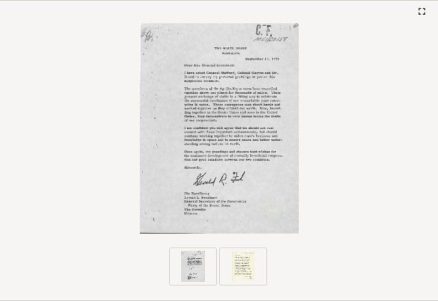
After this introduction, divide students into groups. Instruct students to analyze the documents by comparing them to each other. By the end of the activity, students should be able to identify the authors, their main points, and how their letters differ.
Once the activity is finished, reconvene. Ask students to brainstorm ideas about why space provided unique opportunities for encouraging diplomacy. See if they have additional knowledge about cooperation between the United States and other nations on other space programs.

To the extent possible under law, National Archives Foundation has waived all copyright and related or neighboring rights to “Apollo-Soyuz: Space Age Detente”
Description
In July 1975, the first joint Soviet-American spacecraft docking took place. In this activity, students will analyze the way that government officials in both the United States and the Soviet Union valued space exploration for more than scientific advancement. Students will learn about the ways space exploration was used for diplomacy and the impact of international tensions underlying the science.
Share this activity with your students
Documents in this Activity
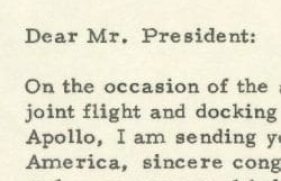
Message from Soviet General Secretary Leonid Brezhnev to President Gerald Ford Regarding the Apollo-Soyuz Test Project
Contemporary United States (1968 to the present)