


A Coal Miner’s Work: Harry Fain

Making Connections
Share to Google Classroom

Recommended Activity
Published By:
National Archives Foundation
Historical Era:
Postwar United States (1945 to early 1970s)
Thinking Skill:
Historical Analysis & Interpretation
Bloom’s Taxonomy:
Analyzing
Grade Level:
Middle School, High School
Suggested Teaching Instructions
This activity can be used during a unit on the Industrial Revolution, labor, or the post World War II era. For grades 6-12. Approximate time needed is 60 minutes.
To begin, ask students to quickly scan all of the photographs in the activity before choosing four for deeper analysis. For the photographs that students choose to analyze, tell them to respond to the questions in the blank box following each photo:
- Quickly scan the photo. What do you notice first?
- List the people, objects and activities you see.
- Where is it from?
- When is it from?
- Write one sentence summarizing this photo.
- What did you find out from this photo that you might not learn anywhere else?
- What questions do you still have after viewing the photograph? Where could you get answers to help you understand this topic?
After analyzing four photographs individually, place students in small groups to compare and contrast their findings. Once they are familiar with each other’s photographs, ask them to compile a list of adjectives that they think describe the life of a coal miner working in the mid-20th century (the task presented under “When You’re Done”).
Provide some additional context about the Coal Survey.
Miners of bituminous (soft) coal joined a series of massive post–World War II labor strikes. Their primary demands were improved health and safety conditions and a health and welfare fund. President Harry S. Truman seized the mines after seven weeks of negotiations between the United Mine Workers of America (UMWA) and the private mine operators failed. The deal struck between the government and the UMWA included a promise to conduct a survey of factors affecting the miners’ health and welfare. The government contracted photographer Russell Lee to document the study with photographs.
In 1946, Russell Lee took photographs for a federal government survey of medical, health, and housing conditions in coal communities. Located in remote areas and patrolled by mine company guards during times of labor unrest, coal communities were normally inaccessible to outsiders. But government seizure of the mines from private operators gave Lee an unprecedented view into coal fields across the country—from Pennsylvania to Wyoming. Russell Lee took more than 2,000 photographs of the miners in their homes, workplaces, and communities. These images are rich sources of historical information. They are also a tribute to the miners—unsung heroes whose labor was critical to the economic and industrial development of the United States.
Ask students to discuss these adjectives in their small groups. Prompt students to explain their choices with evidence from the photographs. Bring the class back together and discuss their findings, posting them for the entire class to see.

To the extent possible under law, National Archives Foundation has waived all copyright and related or neighboring rights to “A Coal Miner’s Work: Harry Fain”
Description
In this activity, students will analyze a series of photographs taken by renowned photographer Russell Lee to reflect on the coal mining industry in the mid 20th century. The holdings of the National Archives include thousands of photographs taken by Russell Lee as part of a survey that was conducted after negotiations between the United Mine Workers of America and the Federal government.
Share this activity with your students
Documents in this Activity
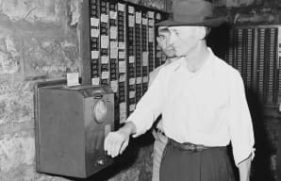
Harry Fain checks out in the afternoon
Postwar United States (1945 to early 1970s)
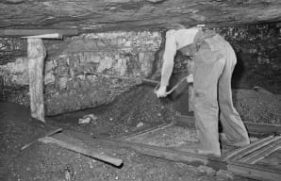
Harry Fain drills coal with hand auger
Postwar United States (1945 to early 1970s)
