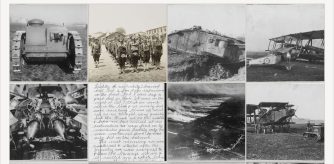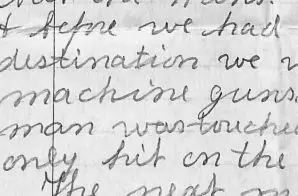
In this World War I account, Corporal Eugene McLain describes parts of the war as “exciting.” He was glad he had the experience, but was “also glad when it ended. Because honestly it is Hell.”
This document comes from a collection of “Personal War Experiences” that WWI servicemen were asked to write after their return from the front during the Meuse-Argonne Offensive. The men were personnel of the 36th Division – known as the Lone Star Division, formed from the Texas and Oklahoma National Guard – of the American Expeditionary Forces (AEF).
Corporal McLain’s account includes derogatory terms used more frequently at that time. He calls German soldiers “Huns,” and refers to his American Indian comrades as “redskins.” He wrote “…Believe me those redskins didn’t have any mercy on them.” McLain was referring to Company E of the 36th Division, which fought alongside Company D (to which Corporal McLain belonged). During WWI, American Indians were integrated into numerous divisions of the AEF. A few units, however – like Company E of the 36th Division – were all American Indian. More than 12,000 American Indians served in the armed forces of the United States during WWI. In the army, their many roles included serving as gunners, snipers, patrol workers, messengers, scouts, medical personnel, radio operators, as well as code talkers.