Born enslaved in Mississippi in 1862, Ida B. Wells became a teacher, journalist, newspaper editor, suffragist, activist, and feminist. After three of her friends were lynched, Wells became a vocal anti-lynching activist and lecturer. Fleeing Memphis because of her activism and journalism, she eventually settled in Chicago where she published the Red Record, the first statistical analysis of lynchings nationwide, and continued her work fighting violence and prejudice against Black Americans.
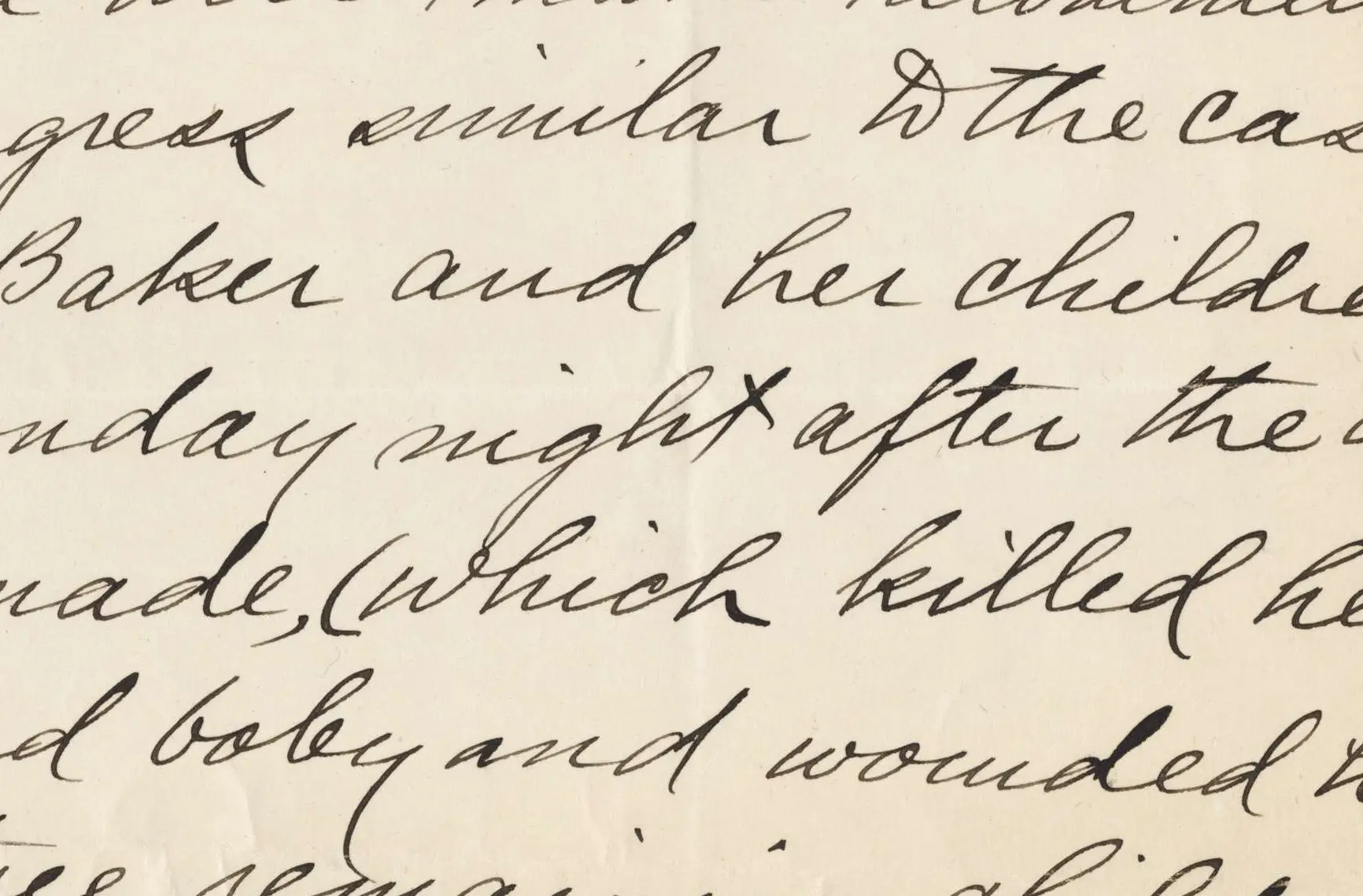
In this letter to Senator Henry Dawes of Massachusetts, Wells appealed for justice in the lynching of Postmaster Frazier B. Baker and his two-year-old daughter, Julia, in South Carolina, in 1898. She urged Congress to act on behalf of the remaining members of the Baker family. The Department of Justice did not prosecute anyone after an all-white jury produced a mistrial.
Wells-Barnett became internationally known for her anti-lynching activism and was prominent in other causes. She organized The Women’s Era Club, a first-of-its-kind civic club for African American women in Chicago. She also helped to found the Negro Fellowship League (NFL), the first Black settlement house in Chicago. She co-founded the Alpha Suffrage Club in Chicago, the largest black women’s suffrage club in Illinois, helped launch the National Association for Colored Women (NACW), and was a founding member of the National Association for the Advancement of Colored People (NAACP).