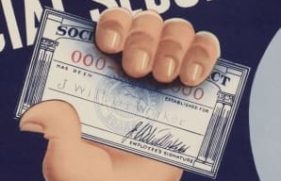
The Social Security Act established a system of old-age benefits for workers, benefits for victims of industrial accidents, unemployment insurance, and aid for dependent mothers and children, persons who are blind, and persons with disabilities.
Before the 1930s, support for the elderly was a matter of local, state, and family concern rather than a federal concern (except for veterans’ pensions). However, the widespread suffering experienced during the Great Depression elicited congressional support for numerous proposals for a national old-age insurance system.
On January 17, 1935, President Franklin D. Roosevelt sent a message to Congress asking for “social security” legislation. The same day, Senator Robert Wagner of New York and Representative David Lewis of Maryland introduced bills reflecting the administration’s views. The resulting Senate and House bills encountered opposition from those who considered it governmental overreach into the private sphere, as well as from those who didn’t want employers to have to pay additional taxes. Eventually a compromise bill passed both houses, and on August 15, 1935, President Roosevelt signed the Social Security Act into law.
The act created a uniquely American solution to the problem of old-age pensions. Unlike many European nations, U.S. social security “insurance” was supported from “contributions” in the form of taxes on individuals’ wages and employers’ payrolls rather than directly from government funds.
The act also provided funds to assist children, the blind, and the unemployed; institute vocational training programs; and provide family health programs. As a result, enactment of Social Security brought into existence complex administrative challenges. The Social Security Act authorized the Social Security Board to register citizens for benefits, administer the contributions received by the federal government, and send payments to recipients.
The Social Security Act is a part of America’s 100 Docs, an initiative of the National Archives Foundation in partnership with More Perfect that invites the American public to vote on 100 notable documents from the holdings of the National Archives. Visit 100docs.vote today.