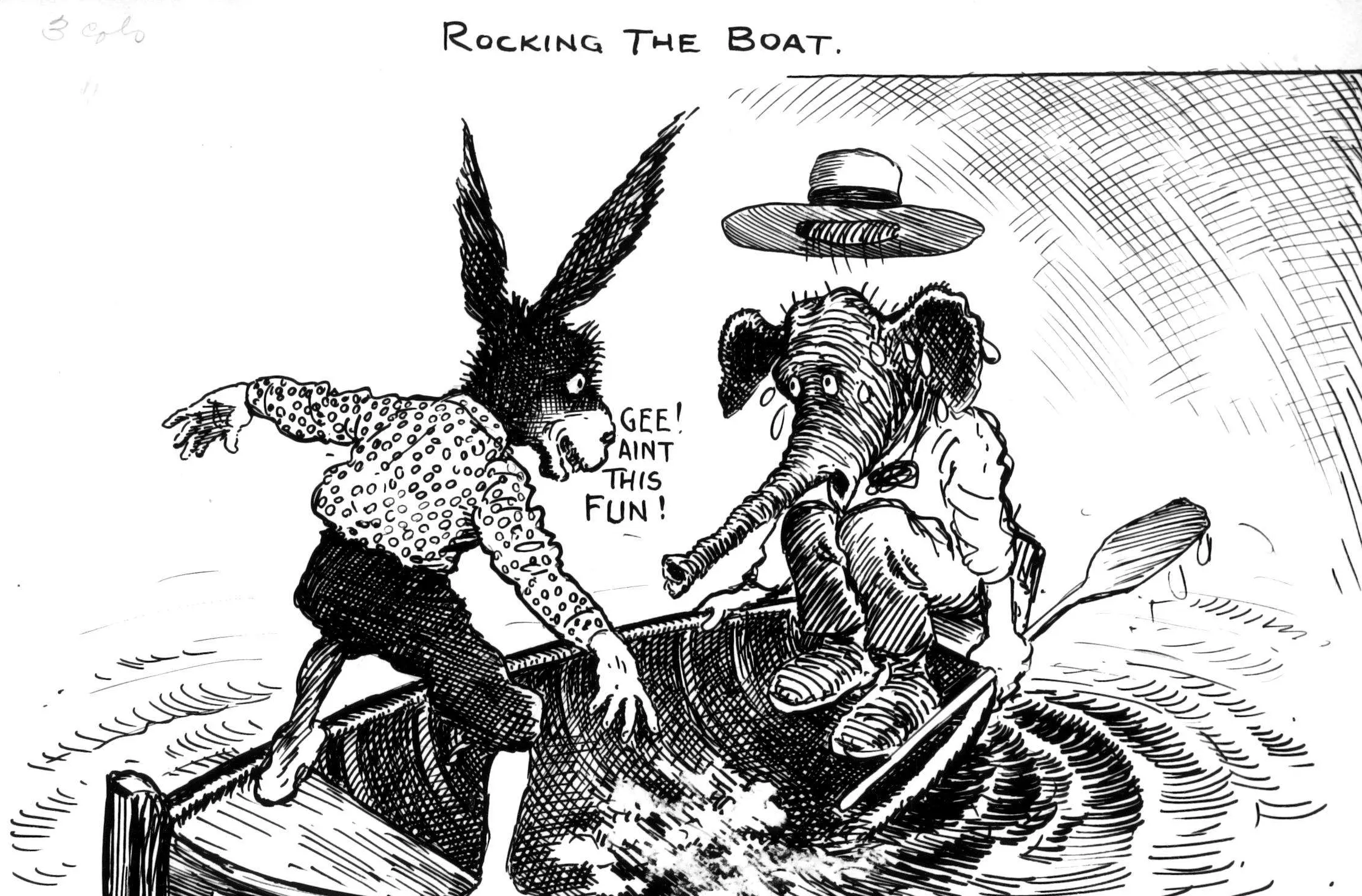
Each political party in Congress is eager to place the opposing party under political pressure. Conflict between political parties reflects the differences in interests and positions on major issues. Both parties act or communicate in ways calculated to rally their supporters. At other times, both parties are eager to compromise on policy or legislation. This cartoon shows Democrats placing Republicans under political pressure on the tariff issue, the key political issue of the era. An emergency tariff bill was passed by a special session of Congress and signed by President Harding in May 1921. While giving more protection to farmers, the bill was considered temporary and was to be replaced by permanent legislation. Although the House of Representatives passed a bill reinstituting high protective tariffs, the Senate was far more divided and took many months more to consider the tariff issue. A bill was introduced in the Senate calling for flexibility in setting tariff rates depending upon international competition and domestic needs. The Republican majority in the Senate was not enthusiastic and as debate dragged on few Republican Senators wanted to go into the fall election campaign with a bitter tariff fight on their hands. Farm and business lobbies differed sharply in their views of the legislation; the farm bloc complaining that industry got far more favorable rates than farmers. Democrats complained that the flexibility features of the tariff bill transferred too much power from the legislative to the executive branch. Cartoonist Clifford Berryman highlights the political differences with the Democratic mule rocking the “tariff legislation” boat while shouting “Gee, ain’t this fun?”, while the Republican elephant cowers in fear at the back of the rowboat.
This cartoon was drawn by Clifford Berryman, one of Washington, DC’s best-known cartoonists in the early to mid-1900s. Berryman drew for the Washington Post and Evening Star newspapers. His cartoons touched on a variety of subjects including politics, elections, and both World Wars.