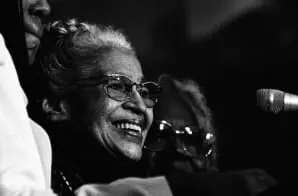
On December 1, 1955, Rosa Parks, a sexual assault investigator for the National Association for the Advancement of Colored People (NAACP), boarded a Montgomery city bus and was arrested for not giving up her seat. Following Parks’s arrest, JoAnn Robinson, President of the Women’s Political Council, distributed 50,000 fliers calling for a daylong bus boycott. The Montgomery Bus Boycott began on December 5 and continued for 381 days.
Earlier that year, on March 2, 1955, Claudette Colvin had refused to give up her seat on a Montgomery, Alabama, city bus and was arrested. On April 29, Montgomery resident Aurelia Browder was forced to give up her seat on a city bus, inspiring Montgomery’s black community and the Women’s Political Council to begin planning the boycott.
Colvin and Browder along with two other women, Mary Louise Smith and Susie McDonald, became plaintiffs in the civil suit Browder vs. Gayle filed in U.S. District Court, challenging the constitutionality of the Montgomery and Alabama segregation laws (the buses operated by the City of Montgomery were privately owned). The U.S. Supreme Court upheld the lower court’s decision, legally ending racial segregation on public transportation in the state of Alabama and ending the Montgomery Bus Boycott.