The Constitution requires that the President “…shall from time to time give to the Congress Information of the State of the Union.” As was the custom in the 19th century, President Lincoln delivered his message in writing; the Secretary of the Senate read it aloud.
The message (select pages shown here) was delivered three months after Lincoln issued the Preliminary Emancipation Proclamation and exactly one month before the Emancipation Proclamation went into effect.
The Union lay in shambles. Lincoln sought to re-inspire Congress after the horrifying battle at Antietam – the bloodiest battle of the Civil War. He summoned the Union to the great task of abolishing slavery in order to preserve the union. Slavery had already been abolished in Washington, DC, and in the territories of the United States.
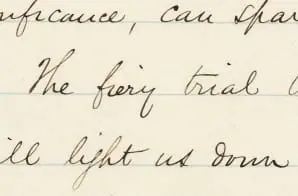
Lincoln’s message became known as the “Fiery Trial” message:
Fellow-citizens, we cannot escape history. We of this Congress and this administration, will be remembered in spite of ourselves. No personal significance, or insignificance, can spare one or another of us. The fiery trial through which we pass, will light us down, in honor or dishonor, to the latest generation.
Lincoln ended the message on the subject of slavery and preserving the United States:
In giving freedom to the slave, we assure freedom to the free—honorable alike in what we give, and what we preserve. We shall nobly save, or meanly lose, the last best, hope of earth.