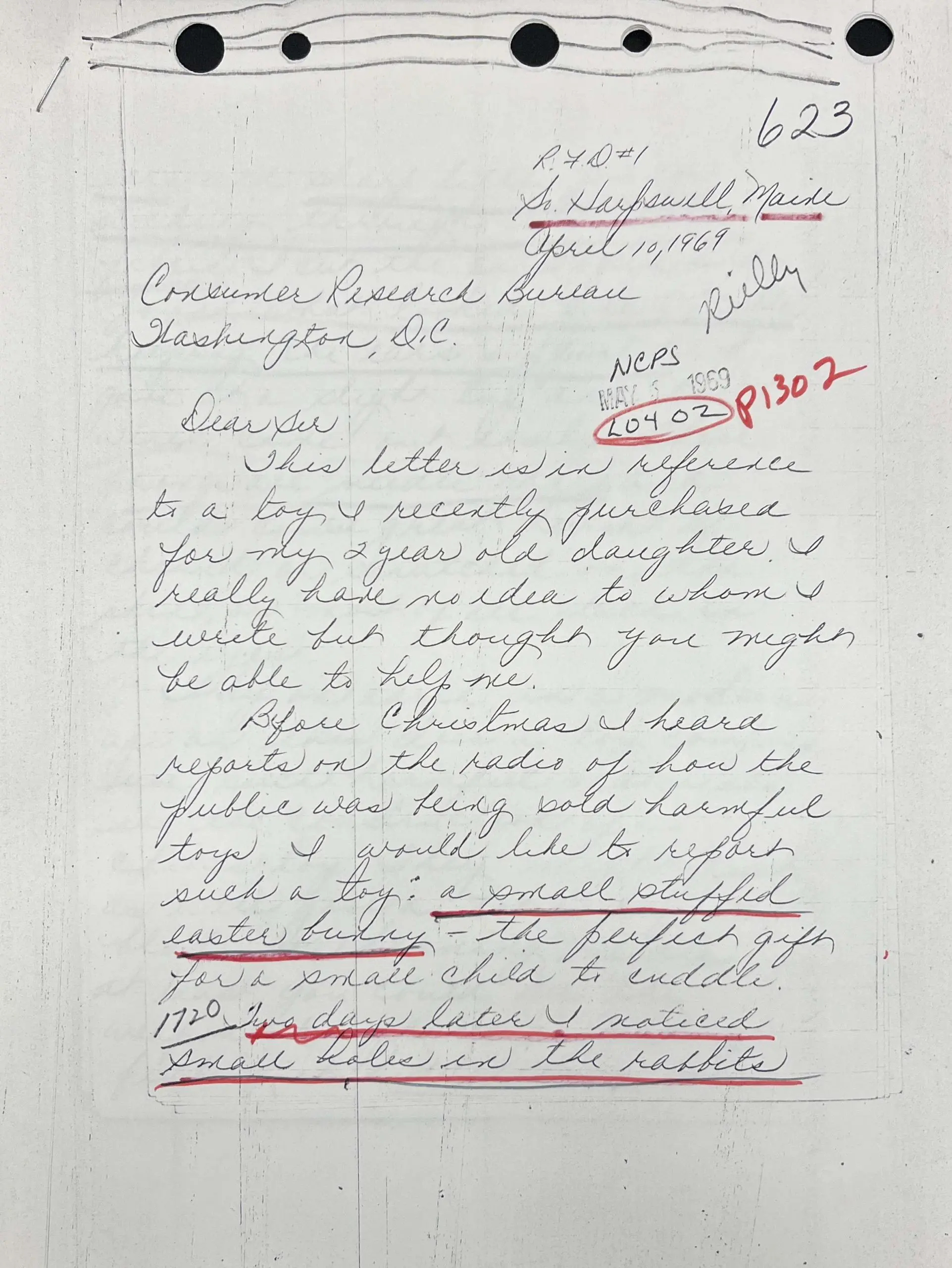
On April 10, 1969, Dianne Morgan of Harpswell, Maine, mailed a complaint to the National Commission on Product Safety about a stuffed Easter bunny. She had purchased the doll for her two-year-old daughter and was greatly pleased to find “the perfect gift for a small child to cuddle.”
Two days later, Morgan “noticed small holes in the rabbit’s ears, and sharp little prongs sticking through the satin fabric.” When she cut the ears open for a closer look, she surprisedly uncovered “what looked like T.V. cable” sticking out of the rabbit’s head. These wires “could cause great harm if chewed on or scratched on the skin, or most of all stuck in the eyes.” Like many other caregivers who came across risky toys, Morgan denounced the manufacturer: “Why on earth […] does a toy company use such harmful materials in the construction of a child’s toy. They might just as well give a tot a razor blade or darning needle.”
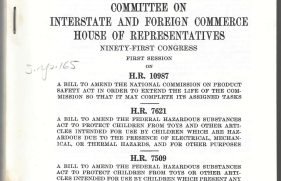
This letter and dozens of others were sent to Federal agencies, especially the Consumer Product Safety Commission (CPSC). They serve as invaluable resources for learning about the toy safety crisis of the 1960s and 1970s. The troubling experiences of children and their families not only showcased the hidden risks of contemporary toys but also contributed to new laws regulating the safety of consumer products.