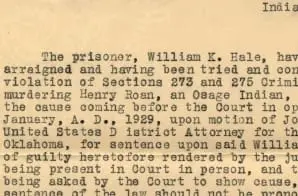
In the 1920s, a man named William Hale hatched a plot to kill Native Americans from the Osage Nation so he could take the profits related to oil production for himself.
Decades earlier, the Osage Nation were the surprise recipients of a vast oil and mineral deposit discovered on their reservation. By 1906 the Osage had negotiated another deal with oil companies and the federal government to retain their “headrights” on any mineral and oil deposits within the reservation. They were now some of the richest people in North America, earning approximately 10 million to 30 million dollars a year. A series of mysterious deaths (initally ruled as suicides or alcohol poisoning) soon followed.
A contributing factor to the Osage murders was a federal guardianship system requiring that they could manage their funds responsibly, or a guardian would be appointed. This immediately led to con artists, corrupt lawyers and bankers taking funds away from Osage members. In fact, many Whites even married their way into rich Osage families to obtain guardianship that way. And if an Osage died during that guardianship, the guardian get petition to inherit the estate.
Although he was behind the murders of at least 60 Native Americans—including nearly an entire family—William Hale was put on trial for only one of his victims, Henry Roan. These crimes occurred in the early years of the FBI, which investigated and arrested William Hale and his accomplice, John Ramsey, for Roan’s murder. The other cases went unsolved; however, the FBI strongly believed Hale was responsible.