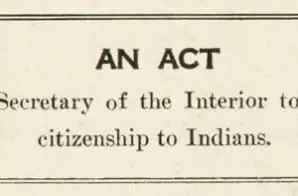
The Indian Citizenship Act extended citizenship to the approximately 125,000 Native Americans who were still not recognized as American citizens in 1924. This act (Public Law 68-175, 43 STAT 253), also known as the Snyder Act, authorized the Secretary of the Interior to issue certificates of citizenship to American Indians.
Although Native Americans were finally recognized as “citizens” of the United States in 1924, the overall impact on their rights was minimal. Under the act, Native Americans still retained their tribal affiliations and rights to tribal property. This part created confusion over Native American rights. It led future Government officials to believe that Native Americans were not full American citizens, and therefore not entitled to all of their rights.
Many tribes remained as wards of the Government, and the right to vote was slow to arrive for Native Americans in certain states. It would be decades before Native Americans were allowed to vote in all 50 states.