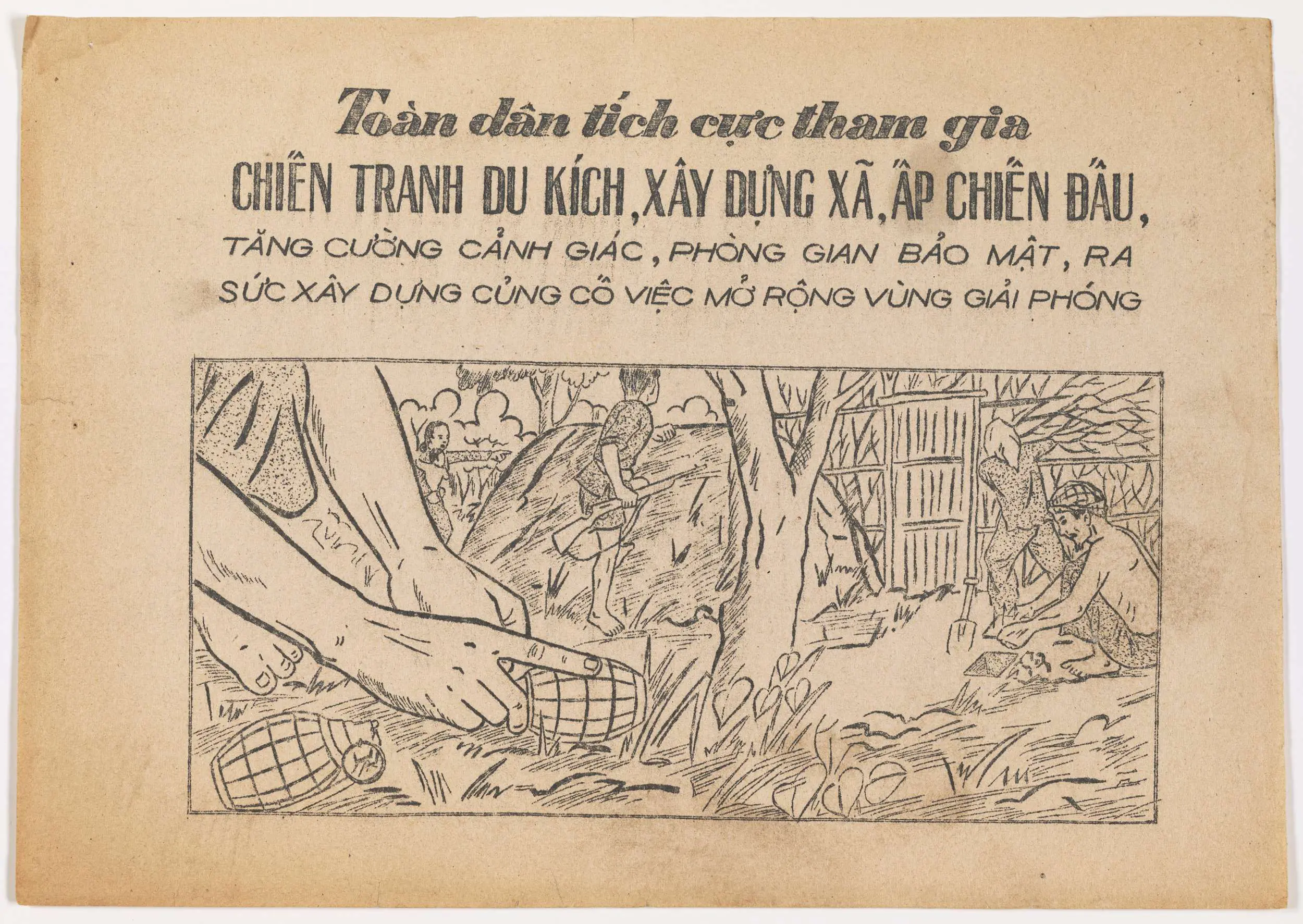
In South Vietnam, the U.S.-supported Diem administration oversaw the building of fortified villages called “Strategic Hamlets” to control rural political activity. President Diem’s influential brother and chief political advisor, Ngo Dinh Nhu, saw the Strategic Hamlets as both protection for rural residents and a way to enlist them to actively combat the communists on the side of the government – ideas urged by this propaganda leaflet.
A translation reads: The whole population actively participates in guerrilla warfare, in the construction of strategic villages and hamlets, in maintaining increased vigilance, in the maintenance of security, [and] in making every effort to support and consolidate the expansion of the liberated zone.
The rural population resented having to move from their ancestral lands to the hamlets they were forced to build. This alienated the population from the South Vietnamese government; and it didn’t keep the Viet Cong away.