A major provision of the 14th Amendment, ratified on July 28, 1868, was to grant citizenship to “All persons born or naturalized in the United States.” Thus it spelled out the status of newly freed slaves—they were to be equal citizens under the law. It also assured all citizens of “due process of law” and “equal protection of the laws.”
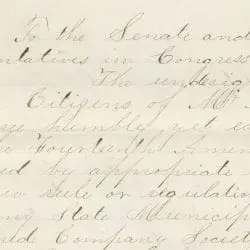
In 1874, seventy-nine “Colored Voting Citizens of McMinn [County], Tennessee” sent this memorial to Congress asking for protection of their civil rights under the Fourteenth Amendment. They asked for the amendment to be so “enforced by appropriate legislation that any law rule or regulation emanating from any State Municipality Corporation or legalized Body, making any discrimination against any person by the use of any word having reference to Color or blood descent; be declared null and void.”
In 1883, however, the Supreme Court decided that the 14th Amendment only restricted state action and didn’t nullify laws making reference to color.