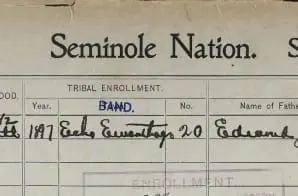
The Dawes Act of February 8, 1887 marked a turning point in determining tribal citizenship. This Act developed a Federal commission tasked with creating Final Rolls for the Five Civilized Tribes of Oklahoma (Cherokees, Chickasaws, Choctaws, Creeks, and Seminoles).
The Commission prepared new citizenship rolls for each tribe, incorporating names of approved applicants while simultaneously documenting those who were considered doubtful and ultimately rejected. Upon approval – and in exchange for giving up their tribal government and recognizing Federal and state laws – enrolled members of the Tribes received an allotment of land. The Dawes Commission required that the individual or family reside in Indian Territory to be considered for approval.
This enrollment card shows 35-year-old Gibson Jones, a Choctaw, living in the Seminole area of Indian Territory.