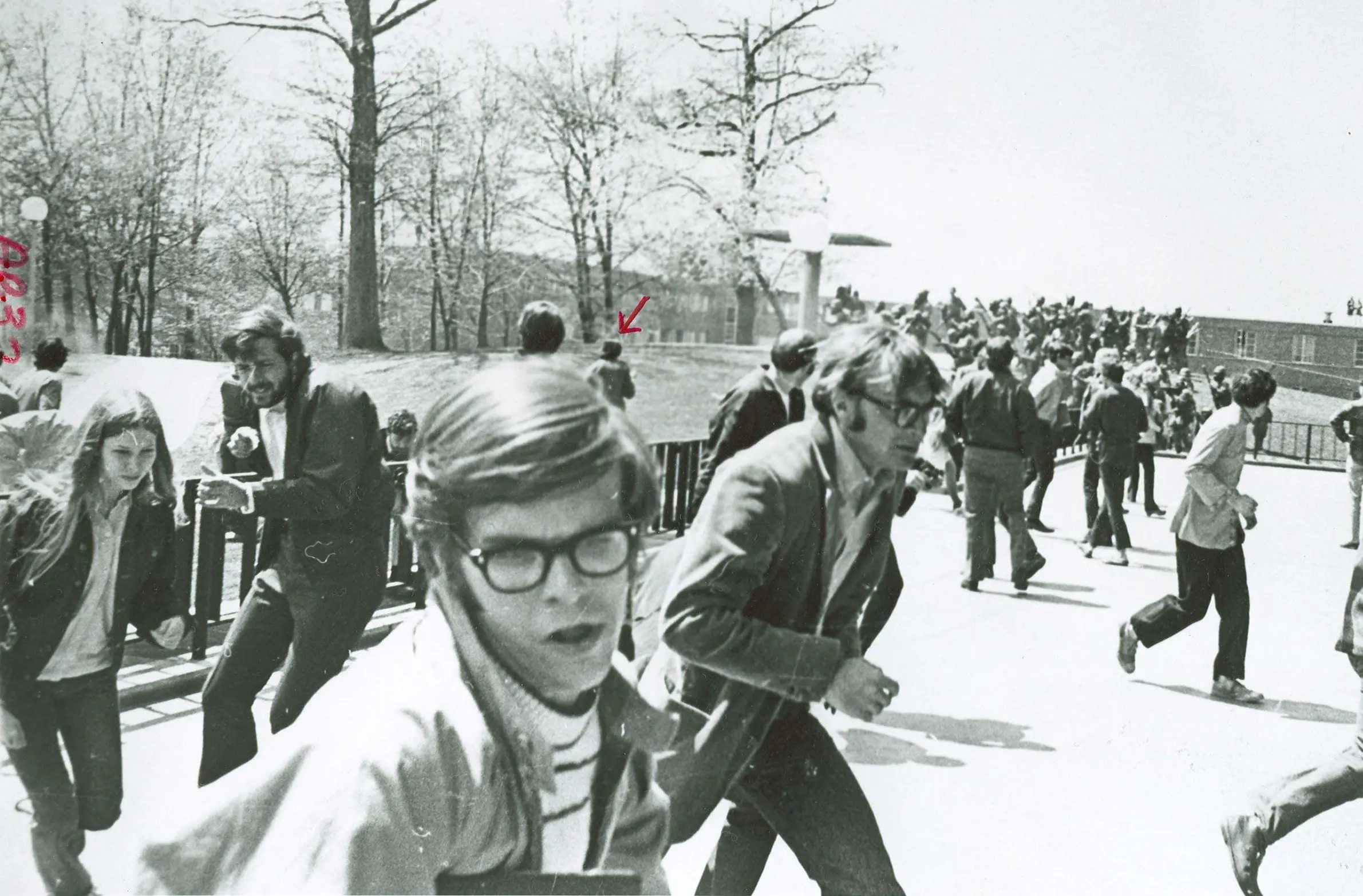
In the midst of Vietnam War, President Nixon had decided to initiate the Cambodian campaign. This apparent expansion of the Vietnam War detonated an explosion of antiwar activity that escalated to a national crisis when four students were shot at a protest at Kent State University in Ohio.
Students protesting the Cambodian incursion had been unruly and violent for days. The town mayor declared a state of emergency and called in the National Guard to help him reestablish order. There were over 1,300 armed troops, armored personnel carriers, mortar launchers, and helicopters on the Kent State University campus on May 4, 1970.
News of the shootings rocked the nation. Many were outraged, but the outrage took different forms. According to a Gallup Poll, 58 percent of Americans blamed the students for the violence at Kent State. Dean Kahler, who was shot and paralyzed during the attack, opened a letter when he came out of an induced coma. It began, “Dear communist hippie radical, I hope by the time you read this, you are dead.”
President Nixon appeared to agree. In response to the shootings he said, “When dissent turns to violence, it invites tragedy.” Others were horrified and erupted in protest. An estimated four million striking students shut down 800 campuses nationwide.
President Nixon created the President’s Commission on Campus Unrest to investigate protest at schools across the country. It concluded that “the indiscriminate firing of rifles into a crowd of students and the deaths that followed were unnecessary, unwarranted and inexcusable.” A federal grand jury indicted eight guardsmen, but found they were not subject to criminal prosecution because they acted in self defense.