During the summer of 1787, while delegates met in Philadelphia for the Constitutional Convention, the company Dunlap & Claypoole made two printings of committee proposals containing draft text of the Constitution. The Philadelphia printers, who were sworn to secrecy, printed an estimated 120 printed drafts for the Convention. Three copies are in the National Archives’ holdings.
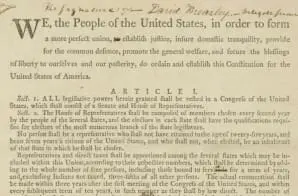
Two of them are the first printed draft as reported by the Committee of Detail on August 6, 1787. One copy comes from the papers of David Brearley, a delegate from New Jersey. That draft included his notations in the margins of the Convention’s work. Another copy is George Washington’s, who presided over the Convention. That copy was annotated by both Washington and William Jackson, the convention’s secretary.
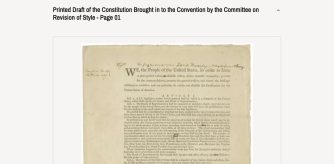
On September 8th, a Committee on Style and Arrangement was elected to revise the style and arrange the agreed upon articles of the Constitution. The five members of this committee—Alexander Hamilton (NY), William Johnson (CT), Rufus King (MA), James Madison (VA), and Gouverneur Morris (PA)—worked the Constitution’s text into its near-final form, condensing the 23 articles into seven. Four days later, on September 12, 1787, the committee completed its draft.
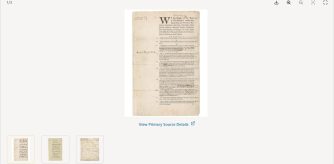
This later draft (seen here) is also housed in the papers of David Brearley. The draft has Brearley’s handwritten annotations of the changes the delegates made after the document was printed, including the last-minute change to reduce the cap on the number of people House members could represent from 40,000 to 30,000. Finally, on September 17, “by the unanimous consent of the States present,” delegates signed the Constitution, scribed by Shallus, and then submitted it to Congress for transmittal to the states for ratification.