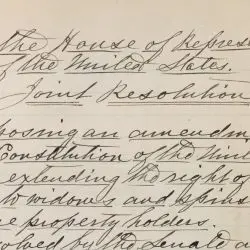
H.J. Res. 159 proposed a constitutional amendment to grant women the right to vote and hold public office if they were widows or spinsters and owned property. Before the 19th Amendment granted women voting rights in 1920, this 1888 resolution proposed voting rights for widows and spinsters only, suggesting that married women were “represented” by their husbands. Part serious and part mocking, suffragist Elizabeth Cady Stanton testified to Congress, stating, “they are industrious, common-sense women…who love their country (having no husbands to love) better than themselves.”
A joint resolution is a formal opinion adopted by both houses of the legislative branch. A constitutional amendment must be passed as a joint resolution before it is sent to the states for ratification.