

The 1936 Olympics and the Boycott Movement

In 1931 Germany was awarded the Summer Olympic games to be held in Berlin in August 1936. Two years later, Adolf Hitler and the Nazi party were elected and quickly enacted laws depriving Jews, Roma, homosexuals and other “inferior” groups of their rights to participate in German government, industry, and society. In 1935, the Nazi government enacted the Nuremberg laws, which prohibited marriage between German Jews and Aryans, and the laws declared that Jews were no longer German citizens.
As early as 1933 many people around the world called on the International Olympic Committee to boycott the Berlin games, since Nazi policies violated the Olympic ideals of sportsmanship and fair play. Meetings were held by the American Olympic organizations — the Amateur Athletic Union and the American Olympic Committee — and citizens wrote letters to the U.S. government for and against an American boycott.
In this activity you will study the primary sources and decide whether the U.S. government should have supported a boycott of the Berlin games. These primary sources come from the collections of the National Archives and the United States Holocaust Memorial Museum.
Please Note: Activities may not be optimized on mobile devices. For the best experience, complete the activity on a desktop or laptop.
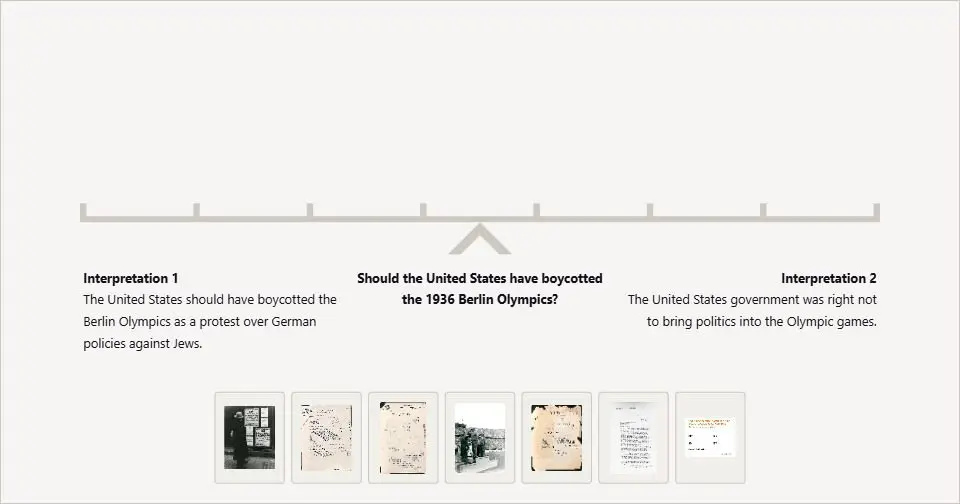
View the full activity: https://docsteach.org/activity/the-1936-olympics-and-the-boycott-movement/
