

Confronting Work Place Discrimination on the World War II Home Front

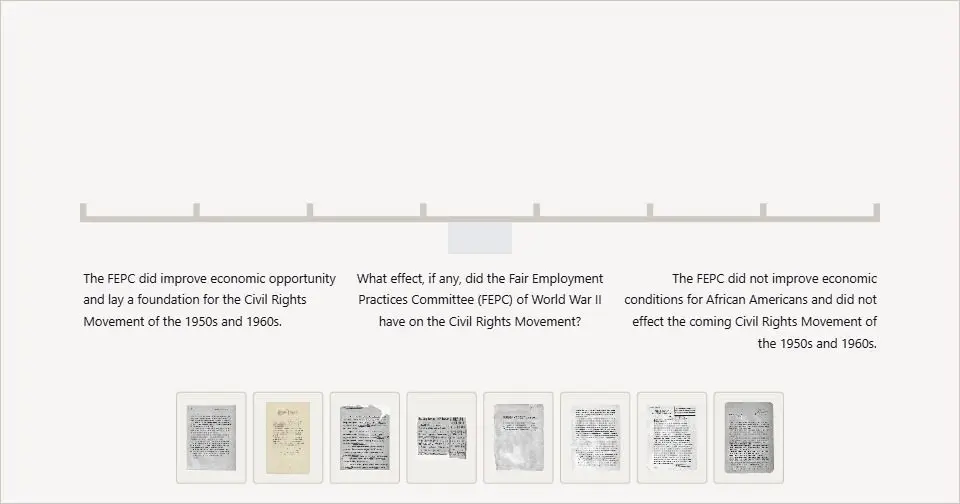
In 1941, A. Philip Randolph threatened a “March on Washington” unless African Americans had opportunities for war industry jobs. To prevent the march, FDR created the Fair Employment Practices Commission (FEPC). But was the commission effective, especially in the South?
A riot erupted at a Liberty Ship factory in Mobile, Alabama, after black welders were stationed alongside white workers in May 1943. The FEPC negotiated an end to the riot with an agreement allowing black welders to work in separate areas. Prior to this time, blacks only held non-skilled positions such as janitors at the factory.
Place the documents on the scale according to whether they show Civil Rights advances or that the FEPC was ineffective in improving conditions.
Please Note: Activities may not be optimized on mobile devices. For the best experience, complete the activity on a desktop or laptop.
View the full activity: https://docsteach.org/activity/confronting-work-place-discrimination-on-the-world-war-ii-home-front/
