

Comparing Perspectives in the Dawes Act and a Hopi Petition

During the 19th century, the U.S. government practiced a policy of assimilation toward Native Communities, creating laws that supported this approach. For example, American Indian children were often forcibly removed from their communities and enrolled in government-run Indian boarding schools. These schools forbid students from speaking their native languages and practicing their traditional cultures, as school administrators sought to assimilate the American Indian children into mainstream “White” society. The federal government also changed how Native Communities owned land as another attempt at assimilation.
Look closely at the two documents below. Using document-analysis techniques, answer the questions that follow.
The first is the Dawes Act (“Act to Provide for the Allotment of Lands in Severalty to Indians on the Various Reservations”). The second is a Hopi petition asking for title to, and tribal ownership of, their lands.
Click on “View Primary Source Details” to see all the pages of the document and a transcription.
Please Note: Activities may not be optimized on mobile devices. For the best experience, complete the activity on a desktop or laptop.
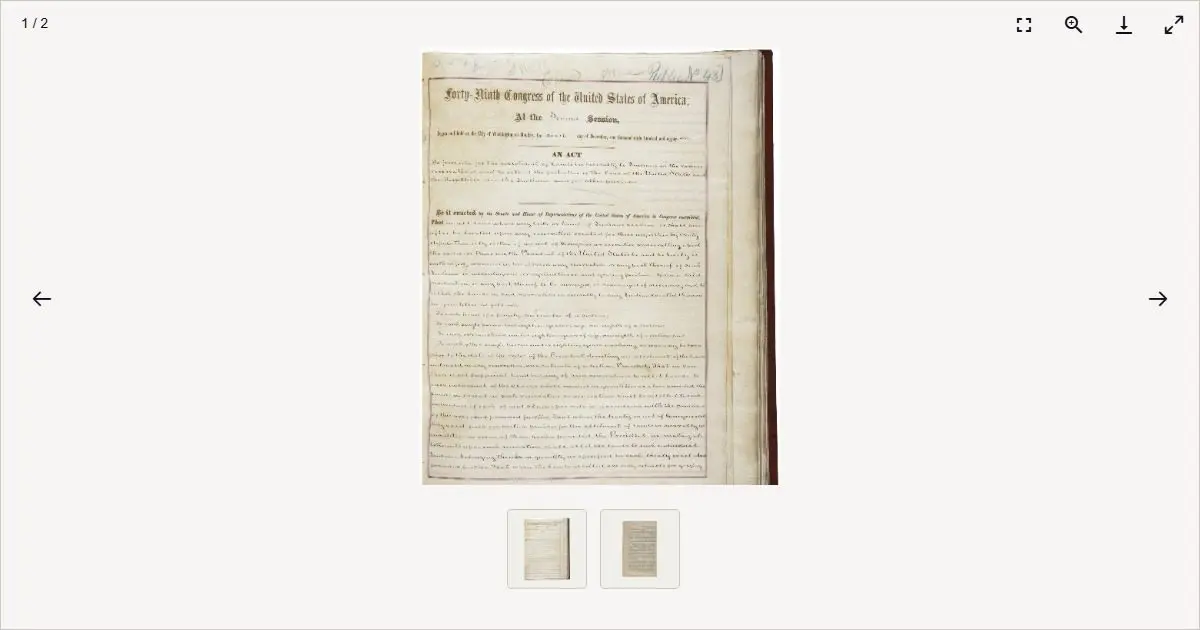
View the full activity: https://docsteach.org/activity/comparing-perspectives-in-the-dawes-act-and-a-hopi-petition/
For each document, answer the following questions:
- Who made it? Was it a person or a group?
- When was it made?
- What information is included about who made it?
- Who is the intended audience?
- What else was happening at the time this was created? How does that context (or background information) help you understand why it was created?
- Why was this primary source made?
- Is there a “point of view” or bias? List details from the text that reveal the creator’s perspective or point of view.
