

Comparing and Contrasting the Emancipation Proclamation, the 13th Amendment and General Order No. 3

President Abraham Lincoln issued the Emancipation Proclamation on January 1, 1863. A little over two years later, in February 1865, what would become the 13th Amendment to the U.S. Constitution was submitted to the state legislatures for ratification. On June 19, 1865, U.S. Major General Gordon Granger issued General Order No. 3.
These three documents–the Emancipation Proclamation, the 13th Amendment and General Order No. 3 (the Juneteenth Order)–each played an important role in communicating that enslaved people were emancipated.
Read and analyze these three documents. Note the similarities and differences in style, tone, intended audience, and message.
Please Note: Activities may not be optimized on mobile devices. For the best experience, complete the activity on a desktop or laptop.
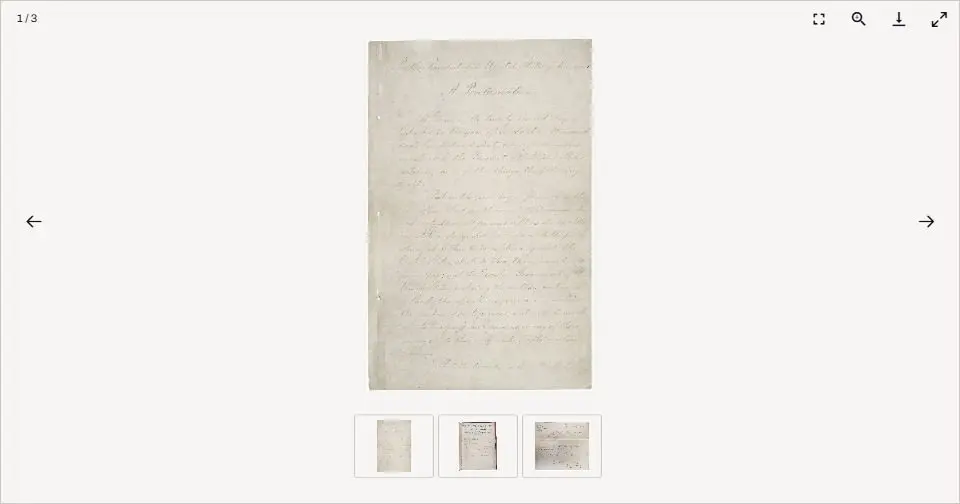
View the full activity: https://docsteach.org/activity/comparing-and-contrasting-the-emancipation-proclamation-the-13th-amendment-and-general-order-no-3/
For each of the documents, answer the following questions:
- What is the main message of the document?
- Describe the overall tone and style of the document.
- Who is the intended audience for the document?
- How does it describe enslaved people and their freedom?
- What does it tell enslaved people to do?
- In what areas of the United States does it apply?
