

[printfriendly current='yes']
Comparing and Contrasting Declarations

Compare and Contrast
Share to Google Classroom
The Declaration of Independence (1776) was written chiefly by Thomas Jefferson in Philadelphia for the Second Continental Congress during the early stages of the American Revolution. The Declaration of Sentiments (1848) was written mainly by Elizabeth Cady Stanton for the Seneca Falls Convention in upstate New York.
Read and analyze these two documents. Note the major similarities and differences in style, tone, message as you answer the questions that follow.
Please Note: Activities may not be optimized on mobile devices. For the best experience, complete the activity on a desktop or laptop.
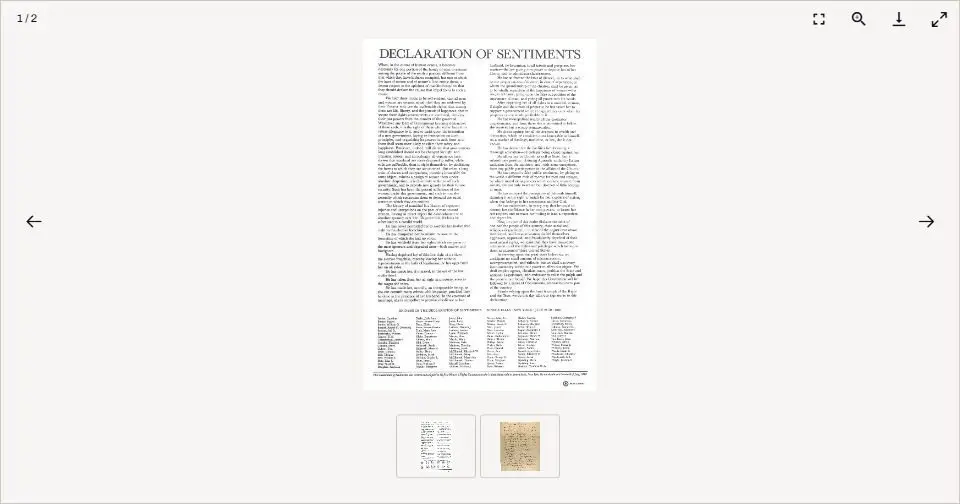
View the full activity: https://docsteach.org/activity/comparing-and-contrasting-declarations/
- Compare and contrast the intended purpose of the Declaration of Sentiments with the Declaration of Independence?
- Compare and contrast the intended audience of the Declaration of Sentiments with the Declaration of Independence?
- Compare and contrast the tone and message of the Declaration of Sentiments with the Declaration of Independence?
- What are the major grievances offered in both the Declaration of Independence and Declaration of Sentiments? What are the major similarities and differences between these types of grievances?
- Compare and contrast the goals and desired outcomes that the Declaration of Sentiments and the Declaration of Independence?

To the extent possible under law, National Archives Foundation has waived all copyright and related or neighboring rights to “Comparing and Contrasting Declarations”