

Analyzing a Coal Mining Labor Photograph

Analyzing Documents
Share to Google Classroom

Recommended Activity
Published By:
National Archives Foundation
Historical Era:
Postwar United States (1945 to early 1970s)
Thinking Skill:
Historical Analysis & Interpretation
Bloom’s Taxonomy:
Analyzing
Grade Level:
Middle School, High School
Suggested Teaching Instructions
This activity can be used during a unit on labor, mining, and the post World War II era. It also serves to teach or reinforce the process of document (photograph) analysis. For grades 6-12. Approximate time needed is 20 minutes.
Direct students to begin the activity individually or in pairs. After reading the introduction, including the photo’s caption, they should spend a minute or two looking at the photograph unassisted. Then they should proceed to answer the questions that follow, which will guide them through the process of document (photograph) analysis:
- Meet the document.
- Observe its parts.
- Try to make sense of it.
- Use it as historical evidence.
Once students have worked through the analysis questions and clicked “When You’re Done,” they will be presented with quotes from and about Russell Lee and his photography. Students will answer:
- Explain how the scene shown in the photograph might have impacted Russell Lee (the impression it made on him). What emotions do you think he was feeling?
- What did he focus on – what parts of the scene impacted him most?
- What impression did Russell Lee want the photo to make on those who saw it? Why do you think that? Explain.
After students have responded to the concluding questions, conduct a class discussion about their answers, and about the role of photographers like Russell Lee in bringing attention to working and living conditions of people around the country.
As an extension to the activity, have students explore additional photographs taken by Russell Lee available in DocsTeach or explore additional DocsTeach educational activities that focus on the Coal Survey.
Students can also be provided with the following additional background information to help them understand Russell Lee’s work in the conclusion:
Miners of bituminous (soft) coal joined a series of massive post–World War II labor strikes. Their primary demands were improved health and safety conditions and a health and welfare fund. President Harry S. Truman seized the mines after seven weeks of negotiations between the United Mine Workers of America (UMWA) and the private mine operators failed. The deal struck between the government and the UMWA included a promise to conduct a survey of factors affecting the miners’ health and welfare. The government contracted photographer Russell Lee to document the study with photographs.
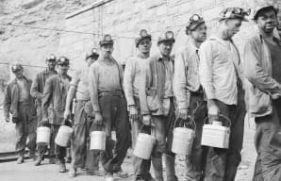
In 1946, Russell Lee took photographs for a federal government survey of medical, health, and housing conditions in coal communities. Located in remote areas and patrolled by mine company guards during times of labor unrest, coal communities were normally inaccessible to outsiders. But government seizure of the mines from private operators gave Lee an unprecedented view into coal fields from Pennsylvania to Wyoming. Russell Lee took more than 2,000 photographs of the miners in their homes, workplaces, and communities. These images are rich sources of historical information. They are also a tribute to the miners—unsung heroes whose labor was critical to the economic and industrial development of the United States.
Russell Lee’s personality, interests, and skills were ideally suited to the coal survey. Originally trained as an engineer, Lee approached his subjects systematically. But he was not without charm. People quickly warmed to the quiet Midwesterner, enabling him to capture scenes of surprising intimacy. With the help of his wife, Jean, Lee recorded detailed captions. Lee’s coal survey photographs depict the effect of global economic and political forces on individuals and honor the miners’ quiet fortitude in the daily struggle to survive.

To the extent possible under law, National Archives Foundation has waived all copyright and related or neighboring rights to “Analyzing a Coal Mining Labor Photograph”
Description
In this activity, students will go through the process of document analysis to better understand a photograph taken by Russell Lee when he was a photographer documenting the coal industry in the mid-20th century.
After analyzing the photograph, they will explain what impression or message he was trying to convey to those who would see his photo.